Practise 17 exam-style questions on Properties and effects of atmospheric pollutants for AQA GCSE Chemistry. Write your answer as you would in the exam and get it marked in seconds against the mark scheme, point by point, with an AI tutor on hand if you get stuck.
17 questions
1–6 marks each
Instant marking
No sign-up needed
17 questions, marked as you go
Sample questions with model answers
Here are 4 of the questions in this topic, each with a model answer, an explanation of why it earns the marks and the mark scheme an examiner would use.
Question 1
2 marks
Explain why homes with gas boilers should have a carbon monoxide detector.
Model answer
If the boiler is faulty or poorly ventilated, the gas can undergo incomplete combustion and produce carbon monoxide. Carbon monoxide is colourless and odourless, so people would not notice it; the detector sounds an alarm to warn them.
Explanation
The detector is needed for two reasons: carbon monoxide can be produced in the home, and people cannot sense it. Linking both ideas earns full marks.
Mark scheme
1 mark
a faulty boiler / poor ventilation can cause incomplete combustion, producing carbon monoxide
1 mark
carbon monoxide is colourless and odourless, so people cannot detect it themselves (the detector warns them)
allow carbon monoxide is toxic so people need to be warned
Question 2
2 marks
On days when levels of sulfur dioxide and oxides of nitrogen in the air are high, people with asthma are advised not to exercise outdoors.
Suggest why.
Model answer
Sulfur dioxide and oxides of nitrogen irritate the airways and cause respiratory problems. During exercise people breathe faster and more deeply, so they take in more of these gases, which could trigger an asthma attack.
Explanation
Both gases are harmful to the respiratory system as well as causing acid rain. People who already have breathing problems are most at risk.
Mark scheme
1 mark
sulfur dioxide and oxides of nitrogen cause respiratory problems / irritate the airways and lungs
1 mark
during exercise people breathe in more air, so take in more of the pollutants / this could trigger an asthma attack
Question 3
3 marks
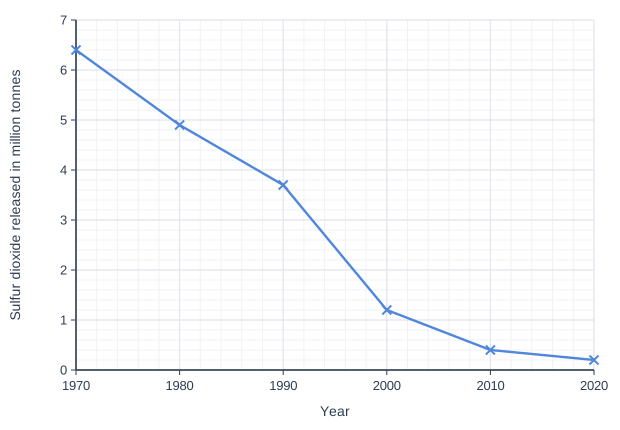
The graph shows the mass of sulfur dioxide released each year in the UK between 1970 and 2020.
Describe the trend shown by the graph and suggest two reasons for it.
Model answer
The mass of sulfur dioxide released fell from about 6.4 million tonnes in 1970 to about 0.2 million tonnes in 2020. This is because far fewer coal-burning power stations are used, and because sulfur is removed from fuels such as diesel before they are sold.
Explanation
Describe the trend with values from the graph. The reasons are the actions taken to tackle acid rain: burning less coal, removing sulfur from fuels and removing sulfur dioxide from waste gases.
Mark scheme
1 mark
decreased from about 6.4 million tonnes to about 0.2 million tonnes
must use data; allow decreased by about 97%
1 mark
fewer coal-burning power stations / more electricity from gas or renewables
max 2 marks for reasons
1 mark
sulfur removed from fuels before they are burned / low-sulfur fuels
1 mark
sulfur dioxide removed from power station waste gases
allow flue gas desulfurisation / scrubbers
1 mark
laws limiting sulfur dioxide emissions
Question 4
4 marks
Describe the problems caused by acid rain.
Model answer
Acid rain damages and can kill trees. It makes lakes and rivers acidic, which kills fish and other aquatic life. It reacts with limestone and marble, damaging buildings and statues, and it corrodes metal structures such as iron bridges.
Explanation
Acids react with carbonates and with many metals, which explains the damage to stone and metal structures. Living things in water and soil are sensitive to changes in pH.
Mark scheme
1 mark
damages or kills trees and other plants
max 4
1 mark
lakes and rivers become acidic, killing fish and other aquatic life
1 mark
damages buildings and statues made of limestone or marble
allow reacts with carbonate rock
1 mark
corrodes metals, e.g. iron or steel structures
1 mark
makes soil more acidic, affecting crops
ignore 'harms humans' unless qualified
Ready to try the rest? Every answer you write is marked against the mark scheme, so you can see exactly where the marks are.
Ctrl + Enter to check
AI TutorHints first, answers after you try
Hi! Stuck? Ask me for a hint and I’ll help you work it out. Once you’ve checked your answer I can explain exactly where the marks are.