Practise 18 exam-style questions on How carbon dioxide decreased for AQA GCSE Chemistry. Write your answer as you would in the exam and get it marked in seconds against the mark scheme, point by point, with an AI tutor on hand if you get stuck.
18 questions
1–6 marks each
Instant marking
No sign-up needed
18 questions, marked as you go
Sample questions with model answers
Here are 4 of the questions in this topic, each with a model answer, an explanation of why it earns the marks and the mark scheme an examiner would use.
Question 1
2 marks
Scientists think that the Earth's early atmosphere was mainly carbon dioxide. Today the atmosphere contains only about 0.04% carbon dioxide.
Give two reasons why the percentage of carbon dioxide in the atmosphere decreased.
Model answer
Algae and plants removed carbon dioxide from the atmosphere by photosynthesis. Carbon dioxide also dissolved in the oceans, where carbonates were precipitated and formed sedimentary rocks such as limestone.
Explanation
Several processes worked together: photosynthesis by algae and plants, dissolving in the oceans, the formation of carbonate sediments and rocks, and the burial of carbon in fossil fuels. Any two of these earn the marks. Animals breathing does not remove carbon dioxide - respiration releases it.
Mark scheme
1 mark
photosynthesis by algae and plants
max 2; allow 'used by plants to make glucose'
1 mark
carbon dioxide dissolved in the oceans
allow 'absorbed by the sea'
1 mark
formation of sedimentary rocks / carbonates were precipitated to form sediments / limestone formed
allow locked up in shells and skeletons of marine organisms
1 mark
formation of fossil fuels (coal, crude oil, natural gas) that contain carbon
ignore 'used by animals'; ignore 'reacted with oxygen'
Question 2
2 marks
Burning fossil fuels today is sometimes described as 'returning ancient carbon dioxide to the atmosphere'.
Explain why.
Model answer
The carbon in coal, crude oil and natural gas came from carbon dioxide that ancient plants and plankton removed from the atmosphere millions of years ago. When the fuels burn, the carbon combines with oxygen and is released into the atmosphere as carbon dioxide again.
Explanation
Fossil fuels are a store of carbon taken out of the atmosphere long ago. Combustion reverses that storage in a very short time, adding carbon dioxide to the atmosphere much faster than it was removed.
Mark scheme
1 mark
the carbon in fossil fuels came from carbon dioxide removed from the atmosphere millions of years ago
allow by photosynthesis of ancient plants / algae / plankton
1 mark
combustion converts the carbon in the fuel back into carbon dioxide (which is released into the atmosphere)
allow burning releases carbon dioxide
Question 3
3 marks
Coral reefs are built by tiny marine animals that make hard skeletons from calcium carbonate. Over millions of years, the remains of old reefs can become limestone.
Explain how the growth of coral reefs removes carbon dioxide from the atmosphere.
Model answer
Carbon dioxide from the atmosphere dissolves in sea water. The coral animals use the dissolved carbon to build skeletons of calcium carbonate. When the animals die their skeletons are buried and compressed into limestone, so the carbon is locked away in rock for millions of years instead of returning to the atmosphere.
Explanation
This is the same process that formed limestone from the early atmosphere's carbon dioxide. The carbon moves from the air, into the sea, into calcium carbonate skeletons and finally into sedimentary rock.
Mark scheme
1 mark
carbon dioxide from the atmosphere dissolves in sea water
max 3
1 mark
the coral animals use the dissolved carbon dioxide / carbonate to make calcium carbonate skeletons
1 mark
when they die the skeletons are buried and compressed to form limestone / sedimentary rock, so the carbon is stored for millions of years
allow carbon locked up in rock
1 mark
more carbon dioxide then dissolves from the atmosphere to replace what was used
Question 4
4 marks
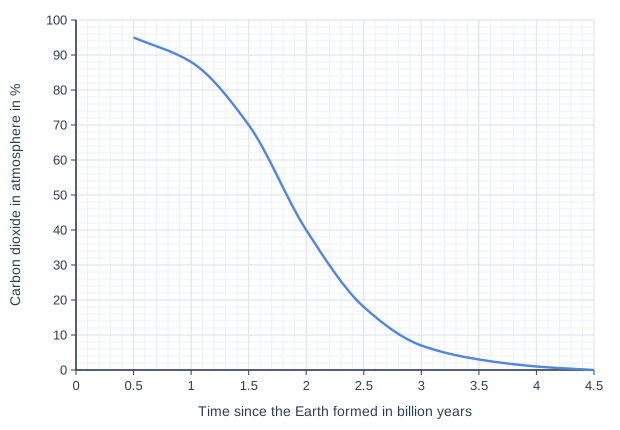
The graph shows one estimate of how the percentage of carbon dioxide in the Earth's atmosphere changed after the Earth formed.
Describe how the percentage of carbon dioxide changed over the time shown and give two reasons for this change.
Model answer
The percentage of carbon dioxide decreased from about 95% to almost 0%. It fell slowly at first, then fastest between about 1.5 and 2.5 billion years after the Earth formed, and then levelled off close to zero. It decreased because carbon dioxide dissolved in the oceans and was precipitated as carbonates, and because algae and plants removed it by photosynthesis.
Explanation
When describing a graph, give the overall trend with values and say how the rate changed. The reasons are the processes that removed carbon dioxide: dissolving in oceans, carbonate sediments, photosynthesis and fossil fuel formation.
Mark scheme
1 mark
decreased overall from about 95% to almost 0%
must quote data; allow start value 90-95%
1 mark
decreased slowly at first, fastest between about 1.5 and 2.5 billion years, then levelled off
any correct description of how the rate of decrease changed
1 mark
photosynthesis by algae and plants
max 2 marks for reasons
1 mark
carbon dioxide dissolved in the oceans
1 mark
carbonates precipitated / formation of sedimentary rocks such as limestone
1 mark
carbon locked up in fossil fuels
Ready to try the rest? Every answer you write is marked against the mark scheme, so you can see exactly where the marks are.
Ctrl + Enter to check
AI TutorHints first, answers after you try
Hi! Stuck? Ask me for a hint and I’ll help you work it out. Once you’ve checked your answer I can explain exactly where the marks are.