Passage A
Livy describes the work of the first decemvirs in 451 BC.
'While the decemvirs were giving justice as fairly as an oracle to the highest and the lowest alike, they were also busy drawing up laws. They set up ten tables and called the people to an assembly. They told them to go and read the laws that had been proposed, with a prayer that it might be good and fortunate for the state and for their children. As far as the minds of ten men could foresee, they said, they had made the rights of all, high and low, equal; but the minds and advice of many were more powerful. Each man should think over every point, discuss it with others, and say in public what was too much or too little in any part... When the laws seemed to have been corrected enough, the assembly of the centuries passed them as the Laws of the Ten Tables. Even now, in the huge heap of laws piled one upon another, they are the source of all public and private law.'
Livy, The History of Rome 3.34.1-6 (adapted)
Using details from Passage A and your own knowledge, what can we learn about how the laws of the Twelve Tables were drawn up and received?
Model answer
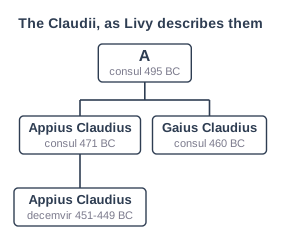
The passage shows that the Twelve Tables were drawn up by the decemvirs while they also governed: they were 'giving justice as fairly as an oracle to the highest and the lowest alike' and 'were also busy drawing up laws'. From own knowledge, these were ten patricians, led by Appius Claudius, elected in 451 BC with power free from appeal, after about ten years of plebeian pressure that began with the tribune Terentilius in 462. Livy also says envoys had been sent to Athens to study Solon's laws.
We learn that the process was public. The decemvirs 'set up ten tables and called the people to an assembly', so for the first time ordinary Romans could read the law instead of relying on patrician priests and magistrates. The 'prayer that it might be good and fortunate' shows the laws were given religious approval. The decemvirs claimed they had 'made the rights of all, high and low, equal', which was exactly what the plebeians had demanded. They also asked for comments, saying 'the minds and advice of many were more powerful', and each man was to 'say in public what was too much or too little in any part'. This suggests the laws were meant to win general consent, though the final vote was in 'the assembly of the centuries', where the wealthiest citizens had most influence.
Finally, Livy says that 'even now... they are the source of all public and private law', which shows how long the laws lasted. From own knowledge, two more tables were added by the second decemvirs in 450, including the ban on marriage between patricians and plebeians, and the Twelve Tables were engraved on bronze in 449. Cicero says that as a boy he learned them by heart. Livy's picture of a fair and open process may be idealised, especially in contrast with the tyranny of the second decemvirs.
Explanation
Strong answers explain what each detail shows about the process (the decemvirs' fairness, public display, consultation, the aim of equality, the vote of the centuries, the laws' long life) and add own knowledge of Terentilius, the decemvirs and the last two tables. Answers that list the contents of the Tables without linking them to the passage miss the AO3 focus.