Passage D
Tacitus describes the governors of Britain from AD 69 to about AD 77.
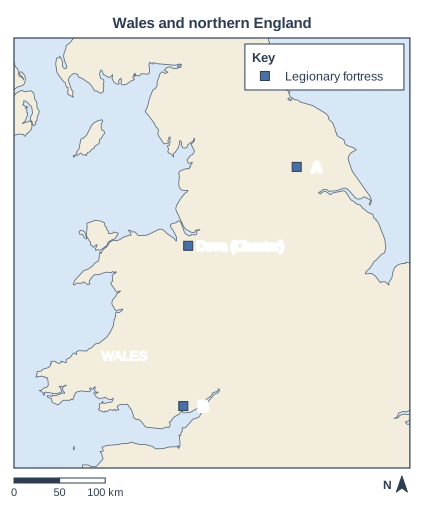
'Vettius Bolanus, while the civil wars were still going on, did not disturb Britain with discipline. There was the same inaction against the enemy and the same unruliness in the camps, except that Bolanus, an honest man with no crimes to make him hated, had won affection instead of authority. But when Vespasian recovered Britain along with the rest of the world, there came great generals and excellent armies, and the enemy's hopes shrank. Petillius Cerialis at once struck terror by attacking the state of the Brigantes, which is said to be the most populous in the whole province. There were many battles, some of them bloody, and he took a great part of the Brigantes' land either by victory or at least by war. ... Julius Frontinus, a great man as far as was then possible, took up and carried the heavy burden, and conquered the strong and warlike tribe of the Silures, overcoming the difficulties of the ground as well as the courage of the enemy.'
Tacitus, Agricola 16-17 (adapted)
What can we learn from Passage D about how Roman policy in Britain changed after Vespasian became emperor?
Model answer
Passage D shows a sharp change from inaction to conquest. Under Bolanus, 'while the civil wars were still going on', there was 'inaction against the enemy' and 'unruliness in the camps', and Bolanus ruled through 'affection instead of authority'. But when Vespasian 'recovered Britain', he sent 'great generals and excellent armies', so Rome had the commanders and troops for a new aggressive policy, and 'the enemy's hopes shrank'. Cerialis 'at once struck terror' by attacking the Brigantes, 'the most populous' state, which shows the aim was to conquer the north. The fighting was hard, with 'many battles, some of them bloody'. Frontinus then 'conquered ... the Silures', overcoming 'the difficulties of the ground', so the policy of conquest continued into Wales.
Explanation
Strong answers contrast the inaction under Bolanus with the aggressive campaigns under Cerialis and Frontinus, and explain that Vespasian's victory brought better generals and armies. Answers that only list what each governor did, without addressing the change, stay in Level 1-2.