'Cleopatra was a successful ruler of Egypt.'
How far do you agree with this view?
You must use and analyse the ancient sources you have studied as well as supporting your answer with your own knowledge.
Model answer
Cleopatra was a successful ruler of Egypt for most of her reign, but her methods depended on Roman generals, and in the end they led to the loss of everything, so her success was real but limited.
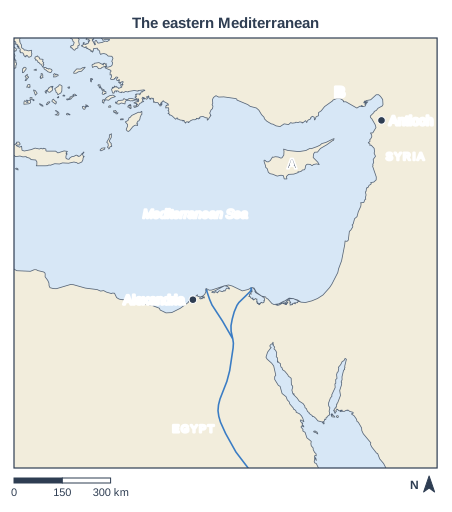
There is a strong case for success. She ruled for over twenty years at a time when Rome could have annexed Egypt at any moment. Dio says that Caesar 'did not make it subject to the Romans' but gave it to Cleopatra. Under Antony her territory grew enormously: Plutarch lists Phoenicia, Coele Syria, Cyprus, much of Cilicia, the balsam groves of Judaea and part of Arabia, restoring much of the old Ptolemaic empire. Her kingdom was rich enough to give Antony 200 ships and 20,000 talents, and Canidius argued that she had 'governed so large a kingdom by herself' for a long time. She also managed her subjects well: Plutarch says she was the first of her family to learn Egyptian, and the Dendera relief shows her and Caesarion as traditional rulers making offerings to the gods. No major revolt against her is recorded.
However, there are strong arguments against. In 48 BC her brother's court drove her out of Egypt, and she returned only with Caesar's army. Dio claims that her power depended on Caesar's 'favour', and her new lands were gifts from Antony, which annoyed the Romans and were lost after Actium. Her alliance with Antony led to war with Rome: Velleius describes her leading the flight at Actium, and within a year she was dead and Egypt was a Roman province. Her reign also saw famine after poor Nile floods and heavy debts inherited from her father, and the territories that made her look so powerful in 34 BC were exactly what turned Roman opinion against Antony and helped Octavian to declare war on her.
The sources shape this debate. Almost all the literary sources are Roman, or Greek writers under Roman rule, and they judge her by her relations with Rome, not by how she governed Egypt. Velleius and Horace wrote for Augustus and his successor, so they present her as a dangerous enemy, not as a capable ruler. Plutarch is more balanced and includes favourable details, but his subject is Antony. The archaeological sources, such as the Dendera relief and her coins, are her own propaganda, so they show what she wanted to achieve rather than proving success. We lack Egyptian accounts of her government.
Overall, judged as a ruler of Egypt, Cleopatra was largely successful: she kept the kingdom independent, expanded it and kept her subjects loyal. But because that success rested on Roman protectors, it ended in disaster, so I agree only in part.
Explanation
Level 5 answers set out clear criteria for success (independence, territory, wealth, relations with subjects, survival), weigh evidence on both sides from several set sources, and analyse how Roman viewpoints and official propaganda affect our picture. Narratives of her life without a judgement about success stay in Levels 2-3.