The big idea
Burning fuels releases pollutants that harm people and the environment. Carbon monoxide is toxic and hard to detect; sulfur dioxide and oxides of nitrogen cause respiratory problems and acid rain; particulates cause global dimming and health problems. For each one you need to describe the problem and explain why it happens.
The pollutants and their effects
| Pollutant | Problem | Why |
|---|
| Carbon monoxide, CO | toxic; not easily detected | it combines with haemoglobin in red blood cells, so the blood carries less oxygen; it is colourless and odourless |
| Sulfur dioxide, SO₂ | respiratory problems; acid rain | it irritates the airways and lungs; it dissolves in water in clouds to form an acid |
| Oxides of nitrogen | respiratory problems; acid rain | they irritate the airways and lungs; they dissolve in water in clouds to form an acid |
| Particulates (soot and unburned hydrocarbons) | global dimming; health problems | they reflect and absorb sunlight; they are breathed in and lodge deep in the lungs |
Carbon monoxide
Carbon monoxide combines with haemoglobin in red blood cells, which reduces the amount of oxygen the blood can carry. The body's cells get too little oxygen, causing drowsiness, unconsciousness and even death. Because it is colourless and odourless, people cannot tell that they are breathing it in. A faulty or badly ventilated boiler, fire or heater can produce it by incomplete combustion, so homes need carbon monoxide detectors, good ventilation and regularly serviced appliances.
Acid rain
Sulfur dioxide and oxides of nitrogen dissolve in water droplets in clouds and react to form acids, such as sulfuric acid and nitric acid. The rain becomes more acidic than normal (its pH is lower), and clouds can carry it far from where the gases were released. Acid rain:
- damages and can kill trees and other plants;
- makes lakes and rivers acidic, killing fish and other aquatic life;
- reacts with limestone and marble buildings and statues, wearing them away;
- corrodes metals, such as iron and steel structures.
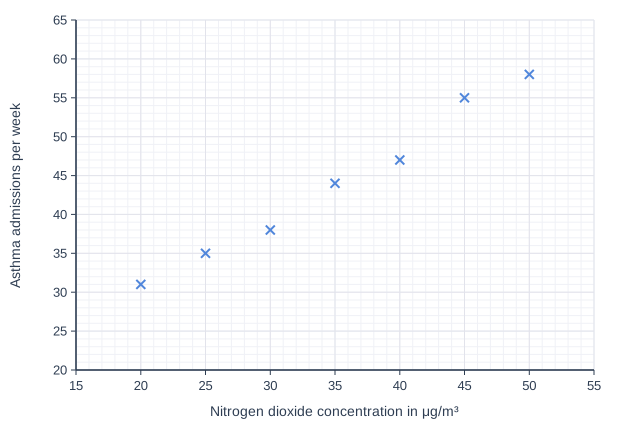
Sulfur dioxide and oxides of nitrogen also irritate the airways, causing respiratory problems; people with asthma are most at risk.
Particulates and global dimming
Particulates are tiny solid particles in the air, such as soot and unburned hydrocarbons from incomplete combustion (for example in diesel engines).
- Global dimming: particulates reflect and absorb sunlight, so less sunlight reaches the Earth's surface. This is not the greenhouse effect, which involves long wavelength radiation leaving the Earth.
- Health problems: the particles are small enough to be breathed deep into the lungs, where they can cause lung damage, respiratory problems and heart disease.
Two gravestones
Two gravestones in the same city churchyard were carved about 150 years ago. The words on the limestone one have almost worn away, but the words on the granite one are still sharp. Explain the difference.
- Burning fuels such as coal in the city released sulfur dioxide and oxides of nitrogen, which dissolved in water in clouds and fell as acid rain.
- Limestone is mainly calcium carbonate, and acids react with carbonates, so the surface of the stone slowly dissolved and wore away:
- calcium carbonate + sulfuric acid → calcium sulfate + water + carbon dioxide
- Granite contains no carbonate, so acid rain has much less effect on it. Both stones are the same age in the same place, so the type of rock explains the difference.
Common mistakes
- Confusing carbon monoxide (CO) with carbon dioxide (CO₂). It is carbon monoxide that is toxic and combines with haemoglobin.
- Giving only "colourless" or only "odourless". You need both to explain why it is not easily detected.
- Blaming carbon dioxide for acid rain. In this topic, acid rain comes from sulfur dioxide and oxides of nitrogen.
- Confusing global dimming with the greenhouse effect or the ozone layer. Dimming means less sunlight reaching the surface.
- Writing "harms humans" without saying how, such as respiratory problems.
Exam tip
"Describe and explain the problems" questions want the problem and the reason for each pollutant. Group sulfur dioxide and oxides of nitrogen together, since they cause the same two problems, and cover all four pollutants in a 6-mark answer.