Explain why hot deserts have much lower biodiversity than tropical rainforests.
Model answer
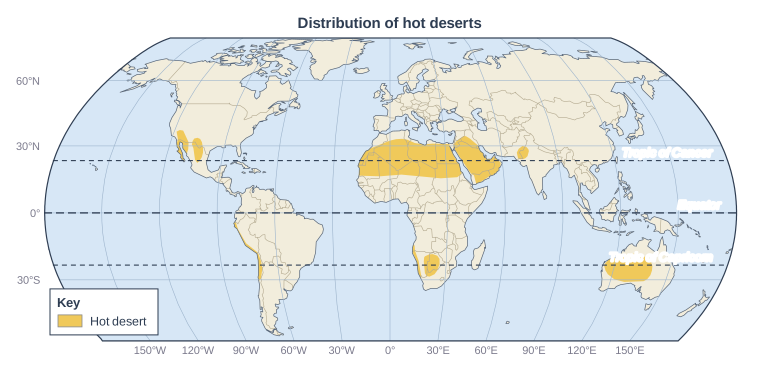
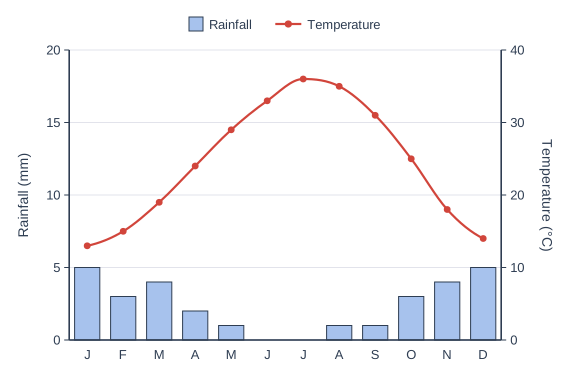
The main reason is the shortage of water. Hot deserts receive less than 250 mm of rain a year, and it is unreliable, while high temperatures cause rapid evaporation. Without water, plants grow slowly and sparsely, so there is little biomass and therefore little food for animals. In contrast, tropical rainforests have heavy rain and high temperatures all year, so plants grow rapidly and continuously, supporting huge numbers of animals.
The extreme conditions in deserts also limit the number of species. Days are very hot and nights can be cold, so only species with special adaptations, such as cacti, camels and kangaroo rats, can survive. Desert soils are thin, infertile and sometimes salty, which further limits plant growth.
Finally, desert vegetation is sparse and has few layers, so there are few different habitats. A rainforest has several layers, from the emergents to the forest floor, each providing different habitats and niches for many species. As a result, desert food webs are short and simple. However, many desert species are highly specialised and found nowhere else, so desert biodiversity is still valuable.
Explanation
Good answers build chains: little water → little plant growth → little food and few habitats → fewer species. Because the question compares two ecosystems, include direct comparisons with rainforests, such as the number of vegetation layers.