Item A
Copperbeech Cycles Ltd
Copperbeech Cycles Ltd sells and repairs bicycles in Cambridge, where cycling is very popular with students and commuters. It is owned by two brothers and employs six staff.
In early 2025 Copperbeech moved from a small shop on a side street to a larger shop on a busy main road, so that it could display more electric bikes (e-bikes). E-bikes now make up more than half of its sales. The rent of the new shop is much higher, and Copperbeech took on an extra full-time mechanic, paid a salary, to service e-bikes.
E-bikes sell for high prices, but Copperbeech's suppliers raised the prices they charge for e-bikes three times during 2025. Online sellers offer many of the same e-bikes at lower prices, so Copperbeech did not pass all of these increases on to its customers. In the autumn it also held a 15% off sale to clear e-bikes that had not sold over the summer.
Revenue from repairs and servicing rose by 20% in 2025, helped by the new shop's busy location. Repairs use few parts, so most of the revenue they bring in adds to profit.
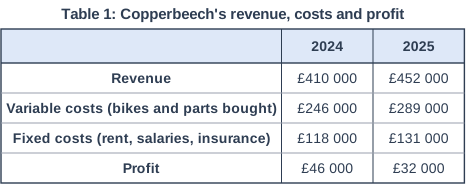
Table 1 shows Copperbeech's revenue, costs and profit for 2024 and 2025.
Copperbeech's revenue rose in 2025, but its profit fell.
Explain one reason why Copperbeech's profit fell in 2025. You should use the information in Item A in your answer.
Model answer
Copperbeech's variable costs rose faster than its revenue. Its suppliers raised the prices of e-bikes three times in 2025, but because online sellers offer the same bikes more cheaply, Copperbeech did not pass all of these increases on to its customers, and its 15% off sale cut the price of some bikes further. So the profit it made on each e-bike fell. Table 1 shows that variable costs rose by £43 000, from £246 000 to £289 000, while revenue rose by only £42 000. With fixed costs also up by £13 000, total costs rose by £56 000, so profit fell from £46 000 to £32 000.
Explanation
Profit falls when total costs rise by more than revenue, and Level 2 answers show this with Copperbeech's own figures, for example variable costs up £43 000 while revenue rose by £42 000. The best answers explain why the costs rose, such as supplier price rises that could not be passed on because of cheaper online rivals, or the higher rent of the new shop. Simply saying 'costs went up' without using Item A stays in Level 1.