Item A
Pendlebrook Pies Ltd
Pendlebrook Pies Ltd is a private limited company in Wigan owned by two cousins, Dean and Aisha. It bakes 4 000 meat and vegetable pies a week, which it sells for £2.40 each to farm shops, cafés and a local rugby league club. Customers praise the pies' homemade taste, and the Pendlebrook name is printed on every wrapper.
A regional supermarket chain with 35 stores in the North West has offered Pendlebrook a two-year contract to supply 6 000 pies a week. The supermarket would pay £1.45 per pie and sell the pies under its own brand name, not the Pendlebrook name. It would pay for each delivery 60 days after receiving it.
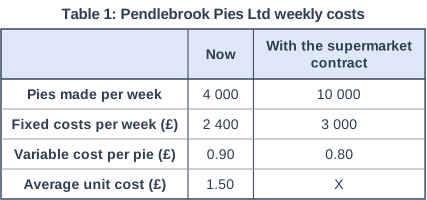
To meet the order, Pendlebrook would need to lease a high-speed oven, which would raise its fixed costs from £2 400 to £3 000 a week. Because it would be buying much larger quantities of flour, meat and vegetables, its supplier has agreed to lower its prices, so variable costs would fall from £0.90 to £0.80 per pie. Table 1 shows the costs.
Dean is keen: 'This is our chance to grow quickly.' Aisha is worried: 'Six in every ten of our pies would go to one customer, and nobody would know they were ours. The oven lease lasts five years. If the supermarket drops us after two years, we are stuck with a big oven and a lot of spare capacity.' The business has £18 000 in its bank account and an overdraft limit of £10 000.
Recommend whether Pendlebrook Pies Ltd should accept the supermarket contract.
Give reasons for your recommendation. Use the financial information provided to support your answer.
Model answer
I recommend that Pendlebrook should accept the contract, but only if it can reduce the risk of being left with spare capacity.
The main reason is the effect on profit. At the moment Pendlebrook makes 4 000 pies at an average unit cost of £1.50, so selling them at £2.40 earns £3 600 profit a week. With the contract its output rises to 10 000 pies and its average unit cost falls to £1.10, because the cost of the new oven is spread over many more pies (technical economies of scale) and the supplier charges less for bigger orders (purchasing economies of scale). Revenue would be £9 600 + £8 700 = £18 300 and costs £11 000, so profit would roughly double to £7 300 a week. Even its existing pies would earn £1.30 each instead of £0.90.
However, there are risks. Each supermarket pie earns only £0.35, and the supermarket would take 60% of the output, which gives it the power to demand a lower price when the contract is renewed. Because the pies would carry the supermarket's brand, the Pendlebrook name would not become better known. Cash flow is also a concern: the supermarket pays after 60 days, so for the first two months weekly costs of £11 000 would be higher than the £9 600 coming in, cutting the bank balance by about £12 000.
The biggest risk is the one Aisha raises. The oven lease lasts five years but the contract only two. If the supermarket ends it, Pendlebrook would be back to 4 000 pies with fixed costs of £3 000 and probably no bulk discount, so its unit cost would rise to about £1.65 and its profit would fall below today's level.
Overall, the contract is worth accepting because it doubles profit and the cash position is manageable. It depends on Dean and Aisha using the two years to find other customers for the extra capacity, so that losing the supermarket would not leave them worse off than today.