Owen is 45 and works long hours. He often eats meat pies, pastries, cheese, fried takeaway food and cream cakes, and he does little physical activity.
An analysis of his diet shows that on a typical day he eats about 120 g of fat, which provides about 40% of his food energy. About 45 g of this fat is saturated fat.
Explain the possible effects of Owen's fat intake on his health in the long term. Refer to the guidelines for fat intake in your answer.
Model answer
Owen's fat intake is well above the guidelines. No more than 35% of food energy should come from fat, but fat provides about 40% of his. His 120 g of fat is about 50 g more than the adult reference intake of 70 g, and his 45 g of saturated fat is 15 g over the NHS limit of 30 g a day for men.
Fat is a concentrated source of energy, providing 9 kcal per gram, so his 120 g of fat alone gives about 1,080 kcal. Because he does little physical activity, he is likely to take in more energy than he uses. The extra energy is stored as body fat, so over many years he may gain weight and develop obesity, which increases the risk of type 2 diabetes and high blood pressure.
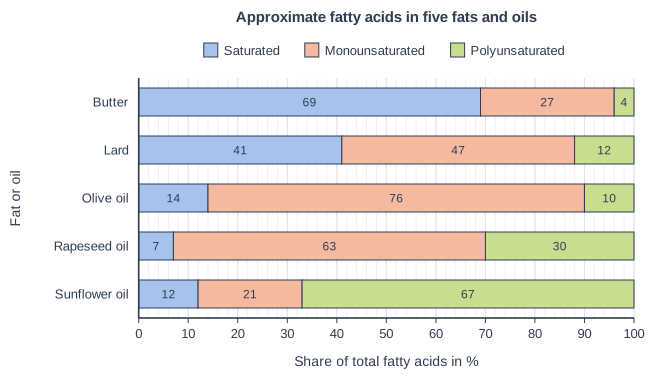
Much of the fat in pies, pastries, cheese and cream cakes is saturated. Too much saturated fat raises the level of LDL cholesterol in the blood. This can build up as fatty deposits in the walls of his coronary arteries, narrowing them and increasing his risk of coronary heart disease, a heart attack or a stroke.
These effects build up slowly, so if Owen ate pastry and fried food less often and swapped some saturated fat for unsaturated oils, he could reduce his risks.
Explanation
Level 3 answers compare Owen's intake with the guidelines (40% of food energy against no more than 35%, 45 g of saturated fat against the 30 g limit for men) and explain chains of cause and effect, such as energy-dense fat leading to an energy surplus and weight gain, or saturated fat raising LDL cholesterol and narrowing the arteries. A common pitfall is to list conditions such as 'heart disease, obesity, diabetes' without explaining how the excess fat leads to them, or to ignore the figures in the question.