Item A
Thistlebrook Candle Company Ltd
Thistlebrook Candle Company Ltd makes scented candles by hand in a converted barn near Driffield in East Yorkshire. Its 12 employees pour the wax, add the scents and set the candles in glass jars. At present the business sells only to about 150 gift shops, which order at trade fairs or by phone. Shops order in boxes of 24 and pay £9 a candle, and the business delivers once a week in its own van.
The owner, Hannah, wants to start selling direct to the public through an e-commerce website. A web designer has told her that customers anywhere in the UK, and abroad, could order 24 hours a day. Online customers would pay £18 a candle, with free delivery.
Online customers usually buy one or two candles at a time, so every order would have to be picked, wrapped carefully and sent by courier. Glass jars break easily, and the courier charges £4.50 a parcel. Hannah expects most online orders to arrive between October and December, when the barn is already busy making stock for the gift shops. There is no spare room in the barn, and Hannah would need to recruit seasonal packing staff.
Online customers expect quick replies to questions and fast delivery. Nobody in the business has experience of running a website, and Hannah answers all customer calls herself.
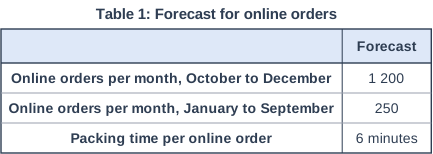
Table 1 shows Hannah's forecast for online orders.
Recommend whether Thistlebrook Candle Company Ltd should start selling its candles through an e-commerce website. Give reasons for your recommendation.
Model answer
An e-commerce website would let Thistlebrook Candle Company reach a much wider market. At present it sells only to about 150 gift shops that order at trade fairs or by phone, but a website would let customers anywhere in the UK, and abroad, order 24 hours a day. Each candle would sell for £18 online rather than £9 to a shop, so even after paying the courier £4.50, a one-candle order brings in £13.50, more than the business gets from a shop. Online orders from January to September, about 250 a month, would also help to keep staff busy in quieter months.
However, e-commerce would put great pressure on the business's operations. Every order is small, so each one has to be picked, wrapped carefully and sent by courier. Hannah forecasts 1 200 orders a month from October to December, which at 6 minutes each is 120 hours of packing a month, roughly 28 hours a week, at the very time the barn is busiest making stock for the gift shops. There is no spare room for extra stock or a packing area, and Hannah would have to recruit and train seasonal packers. Glass jars break easily, so some parcels would arrive broken; each would have to be replaced at the business's cost and could lead to poor reviews. Online customers expect quick replies, but Hannah answers all calls herself and nobody has experience of running a website, so customer service could suffer.
I recommend that Thistlebrook should start selling online, but only once it has solved these operational problems. The higher price per candle and access to customers across the UK make e-commerce worthwhile, and online sales would make the business less dependent on gift shops. However, it depends on finding space for packing, perhaps by renting a small unit, recruiting seasonal packers before October and using stronger packaging to reduce breakages. Hannah could launch the website in the spring, when the barn is quieter and fewer online orders are expected, so staff can learn the new system before the Christmas peak.
Explanation
A Level 3 answer weighs the wider market and the higher price per candle against the operational problems in the case (120 hours of packing at the peak, no space, breakages, Hannah answering every call) and reaches a recommendation that says what it depends on. Answers that only say a website brings more sales, without the operations and customer service evidence, rarely get beyond Level 2.