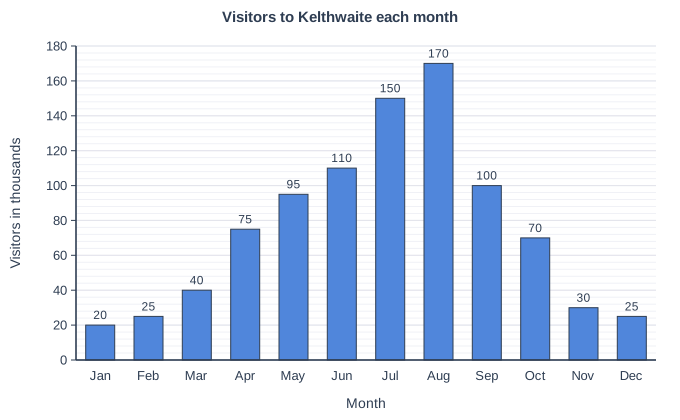
Kelthwaite is a honeypot village in the Lake District National Park. On busy days up to 200 cars cannot find a parking space and park on verges and in gateways, and the footpath to Kel Pike is badly eroded. Option 1 is to build a new 500-space car park and a visitor centre on farmland beside Kel Water at the edge of the village. It would cost £6 million, charge £8 a day for parking and create 25 jobs. Planners expect it to increase the number of cars entering the village on busy days by 20% and visitor numbers by 10%.
To what extent would option 1 solve the problems caused by tourism in Kelthwaite? Use evidence from the information above and your own knowledge.
Model answer
Option 1 would solve some of Kelthwaite's problems in the short term, but I think it would make others worse, so it would only solve them to a small extent.
The most obvious benefit is for parking. At the busiest times about 200 cars currently have nowhere to park, so a 500-space car park would provide more than enough spaces. This would stop cars parking on verges and in field gateways, so residents could get out of their drives, farmers could move their tractors and sheep, and emergency vehicles could get through. The visitor centre would create 25 jobs and could provide toilets and information, educating visitors about the Countryside Code and staying on footpaths. Parking charges of £8 a day could also raise money for maintenance or path repairs, and 10% more visitors would mean more spending in local cafés and shops.
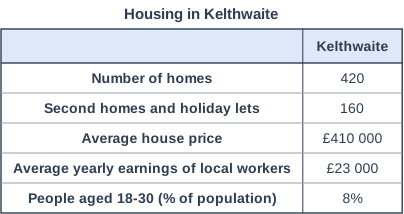
However, option 1 does not tackle the cause of the problems, which is the large number of cars. Planners expect it to increase the number of cars entering the village by 20%, because easier parking encourages more people to drive. This means more congestion on narrow lanes, more noise and more air pollution and carbon emissions. A 10% rise in visitors would also mean more walkers on the path to Kel Pike, making footpath erosion worse, not better. Building a large car park on farmland beside Kel Water would spoil the very landscape that visitors come to see, and it goes against the purpose of National Parks to conserve natural beauty. Option 1 also does nothing about the high house prices caused by second homes, and at £6 million it is the most expensive option.
In conclusion, option 1 would solve the parking problem, at least in the short term, and would bring some economic benefits. But in the long term it is likely to attract more cars and visitors, increasing congestion, erosion and damage to the landscape. It therefore only solves the problems to a small extent, and an approach that reduces car use, such as a park-and-ride, would be more sustainable.
Explanation
A 'to what extent' answer needs a judgement. Level 3 answers check option 1 against each problem: it fixes parking but increases traffic and visitor pressure (more cars attract more cars), worsens erosion and damages the landscape. Recognising short-term against long-term effects is the key to a high mark.