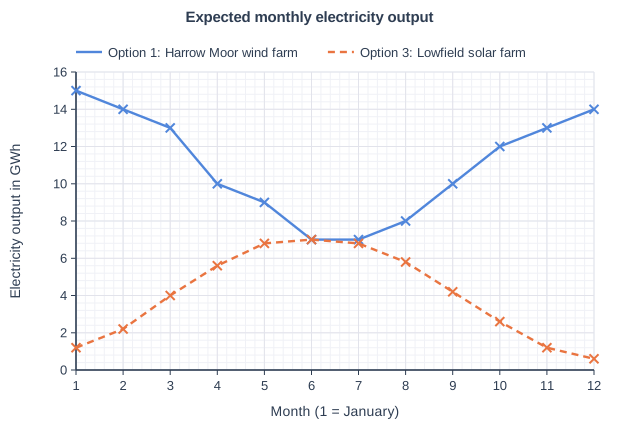
Option 3 for Northmoor, a district in northern England, is a 50 MW solar farm on 100 hectares of farmland at Lowfield, where sheep would still graze between the panels, together with energy-efficiency grants for 12 000 homes. It would generate about 48 GWh a year and save about 30 GWh a year, cost £65 million and be ready by 2027. The council's target is at least 120 GWh a year of extra renewable electricity by 2030.
To what extent is Option 3 the most sustainable of the three options?
Model answer
A sustainable option meets people's needs today without harming the environment or the ability of future generations to meet their own needs, balancing social, economic and environmental factors.
In many ways Option 3 is very sustainable. The energy-efficiency grants reduce the amount of electricity needed at all, which is the most sustainable approach because energy that is not used needs no power station. Insulation and efficient appliances would cut bills for 12 000 households, reducing fuel poverty and improving health in warmer homes. The solar farm would be on lowland farmland, away from the National Park, so it would not damage peat or disturb moorland birds, and sheep could still graze between the panels, keeping some food production. Hedges and wildflowers around the panels could even increase biodiversity. It is also the cheapest option overall at £65 million, the quickest to deliver (2027) and popular, with 60% of residents supporting it.
However, it has a major weakness: it would provide only about 78 GWh a year (48 GWh generated and 30 GWh saved), well short of the 120 GWh target, so on its own it does not meet the region's needs. Solar output is also very low in winter, only about 0.6 GWh in December, exactly when demand for electricity is highest. The solar farm would take 100 hectares out of full food production and create only 5 permanent jobs. By comparison, the offshore wind farm would produce 420 GWh a year and create 60 permanent jobs, although it is expensive, and the onshore wind farm would meet the target cheaply but at a high cost to the landscape and wildlife.
Overall, Option 3 is the most sustainable option to a large extent socially and environmentally, because it reduces demand and causes the least harm. However, it is not sustainable on its own in practical and economic terms, because it does not meet the target or provide enough electricity in winter. It would be most sustainable if combined with the offshore wind farm.
Explanation
Level 3 answers define sustainability, assess Option 3 across all three strands, compare it with the other options using the data, and reach a clear 'to what extent' judgement. Spotting that Option 3 falls short of the 120 GWh target is essential to a balanced answer.