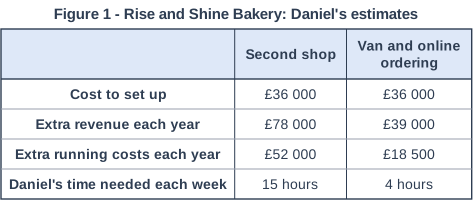
Rise and Shine Bakery is a small bakery in Leeds. Its owner, Daniel, has £36,000 to invest and must choose between two options. Option 1 is to open a second shop in a nearby town. Option 2 is to buy a delivery van and set up online ordering so that the bakery can supply cafés and offices. He cannot afford both.
Figure 1 shows Daniel's estimates for each option (the business and figures are invented).
Using Figure 1, assess whether Daniel should choose the second shop rather than the van and online ordering.
Model answer
On the figures, the second shop looks the better choice. It is expected to bring in extra revenue of £78,000 a year against running costs of £52,000, an extra profit of £26,000. The van and online ordering would bring in £39,000 against costs of £18,500, an extra profit of £20,500. So the shop is expected to earn £5,500 more each year and would pay back the £36,000 faster, in under a year and a half. A second shop would also make the bakery more visible and could build its brand.
However, Daniel must weigh up more than the expected profit. The shop has much higher running costs, £52,000 a year, because it needs rent and staff. This makes it riskier: these are only estimates, and if revenue turned out 20% lower than expected, the shop would make only £10,400 while the van would still make £12,700. The shop would also need 15 hours a week of Daniel's time compared with 4 hours for the van. His time is scarce, so the opportunity cost of the shop includes the time he could have spent improving the existing shop or developing new products. Supplying cafés and offices may also be a growing market at a time when many high streets have fewer shoppers.
Choosing either option means giving up the benefits of the other. Overall, I think Daniel should choose the van and online ordering. Although its expected profit is £5,500 lower, it is less risky, needs far less of his time and can be expanded later if it succeeds. The decision depends on how reliable his revenue estimates are and on his attitude to risk: if he is confident that the second shop will reach £78,000 of sales and he can find a reliable manager, the shop's higher profit could make it the better choice.
Explanation
A Level 3 answer uses the data to compare expected profits (£26,000 v £20,500), weighs this against risk, running costs and the opportunity cost of Daniel's time, and reaches a judgement that explains what it depends on. Either option can earn full marks if the judgement is supported. One-sided answers, or answers that ignore the figure, are capped at 6.