Kelbridge Council is considering paying for free home broadband for 2,400 low-income households in the town for two years. Each connection would cost the council £180 a year. The council says that home internet is no longer a want but a need: most job vacancies, benefit claims and homework are now online. Critics say that the money could be spent on other council services, and that many of these households already use mobile phone data to go online.
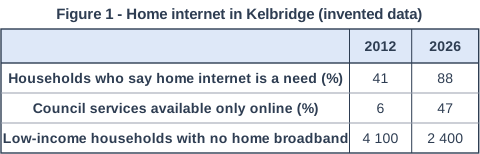
Figure 1 shows some data about home internet in Kelbridge (the town and the data are invented).
Using Figure 1, assess whether Kelbridge Council should pay for free home broadband for low-income households.
Model answer
Figure 1 suggests that home internet has changed from a want into a need in Kelbridge. In 2012 only 41% of households said home internet was a need, but by 2026 this had risen to 88%. Over the same period the share of council services that are available only online rose from 6% to 47%. This means a low-income household without broadband may struggle to claim benefits, apply for jobs or help children with homework. Free broadband could help adults find work, which would raise their incomes and reduce the council's spending on support, and help pupils learn, which improves their future earnings. The council would be deciding who benefits from broadband according to need rather than ability to pay.
However, the scheme has an opportunity cost. It would cost 2,400 × £180 = £432,000 a year, or £864,000 over two years. The council's resources are scarce, so this money cannot be spent on other services such as libraries or care for older people. Some households already go online using mobile data, so part of the money may go to people who already have some access. The number of low-income households without broadband has already fallen from 4,100 to 2,400 without council help, so the problem may continue to shrink on its own. There is also a risk that when the two years end, households cannot afford to keep the connection.
Overall, I think the council should pay for the broadband, but only if it is targeted at households with no other way of getting online, such as families with school-age children and people looking for work. With almost half of council services now online only, a household without internet is cut off from essential services, so the benefits to jobs and education are likely to be greater than the cost. The decision depends on how tight the council's budget is and whether cheaper options, such as social tariffs from broadband firms or free wifi in libraries, could meet the need for less.
Explanation
A top answer weighs the benefits (internet is now a need, access to jobs, services and homework) against the costs (the £432,000 a year opportunity cost, mobile data as an alternative, what happens after two years) and reaches a judgement that says what it depends on. It must use the data, for example the rise from 41% to 88%. Answers that argue only one side or make no use of Figure 1 are capped at 6 marks.