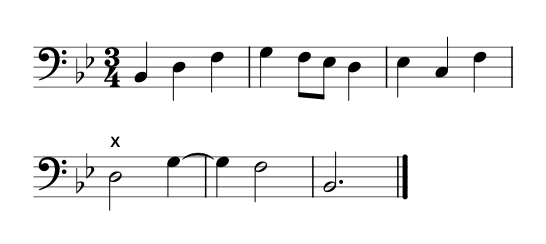
Question 1
2 marksRubato and a pause (fermata) both make a performance move away from strict time.
Explain the difference between rubato and a pause.
Model answer
Rubato means the performer pushes forward and holds back the tempo a little, for expression, so a whole phrase has flexible timing. A pause (fermata) affects just one moment: the note, chord or rest under the sign is held for longer than written, and then the music carries on.
Explanation
One mark for each term explained so that the difference is clear: rubato is flexible timing spread across a passage, while a pause holds a single note or rest. Rubato is listed in Area of study 1 (for example Romantic piano music) and Area of study 4. Do not describe rubato as simply slowing down: it both hurries and holds back.
Mark scheme
-
1 mark
rubato: the performer speeds up and slows down (pushes and pulls the tempo) slightly and freely for expression, across a phrase or passage
Accept 'robbed time', 'flexible tempo', 'stretching and hurrying the beat', 'playing freely with the tempo'. Do not accept 'slowing down' alone (that is a rallentando) or 'no pulse at all' (an underlying pulse continues).
-
1 mark
pause: one note, chord or rest is held for longer than its written length (as long as the performer or conductor chooses), then the music continues
Accept 'hold the note on', 'stop on that note for longer'. The difference is that a pause affects one moment, while rubato affects the timing of a whole passage; credit an answer that makes this contrast.