Country X's government cut the tax rate on business profits (corporation tax) from 28% in 2019 to 22% in 2022. It is now considering a further cut, to 18%, which would cost about £10 billion a year in lost tax revenue.
Supporters say a further cut would encourage firms to invest and attract foreign companies. However, in a recent survey, firms in Country X said that the biggest barriers to investment were a shortage of skilled workers and uncertainty about future demand, not the level of tax.
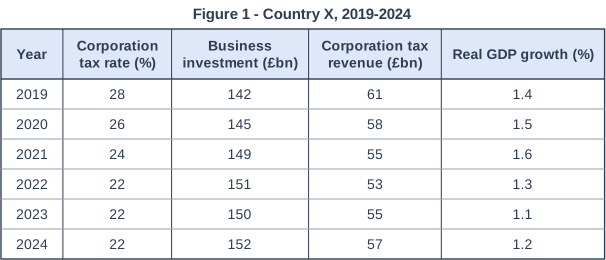
Figure 1 shows data for Country X from 2019 to 2024.
Using Figure 1, assess whether the government of Country X should cut corporation tax from 22% to 18% to increase investment and economic growth.
Model answer
Cutting corporation tax to 18% could increase investment. Firms would keep more of every pound of profit, so they would have more retained profit to spend on new machinery and technology, and a bigger reward for investments that pay off. More investment raises productivity and the economy's productive capacity, which is what long-run economic growth needs. A lower rate would also make Country X more attractive to multinational companies, which could bring new factories, jobs and technology. Figure 1 gives some support: business investment rose from £142 billion in 2019 to £152 billion in 2024, about 7%, while the tax rate was cut from 28% to 22%, and although tax revenue fell from £61 billion to £53 billion by 2022, it recovered to £57 billion by 2024 as profits grew.
However, the evidence that the earlier cuts worked is weak. Investment rose by only about 7% over five years and even fell slightly in 2023, and real GDP growth did not improve for long: it edged up from 1.4% in 2019 to 1.6% in 2021, but then fell to 1.1% in 2023 and was only 1.2% in 2024, lower than before the cuts began. The survey suggests why: firms say their biggest barriers are a shortage of skilled workers and uncertain demand, not tax. A further cut would cost about £10 billion a year, which the government would have to find by borrowing more, raising other taxes or cutting spending, so there is a large opportunity cost. Much of the gain would go to shareholders of already profitable firms, who might pay higher dividends rather than invest, and this could also widen inequality.
Overall, I do not think the government should cut corporation tax to 18%. The data show that a 6 percentage point cut since 2019 brought only a small rise in investment and no lasting rise in growth, and firms themselves say tax is not the main barrier. The £10 billion would be better spent on supply-side policies that tackle the skills shortage, such as education and training. The judgement could change if there were evidence that multinational companies were about to move to countries with lower tax rates, because then a cut might be needed to keep investment in Country X.
Explanation
Strong answers explain how a lower tax on profits could raise investment and growth, then test that against Figure 1: investment rose only about 7%, revenue fell then partly recovered, and growth, after a small rise to 2021, was lower in 2024 than in 2019. They also use the survey (skills, uncertain demand) and the £10 billion cost. The conclusion must weigh both sides and say what it depends on, ideally comparing with another supply-side policy.