The government of Country T (an invented country) wants to reduce income inequality. It is considering three policies. In Country T, 55% of the income of the poorest fifth of households comes from benefits, and 31% of adults in the poorest fifth have no qualifications. Raising the minimum wage would cost the government nothing, but it is estimated that it could lead to the loss of 40,000 low-paid jobs.
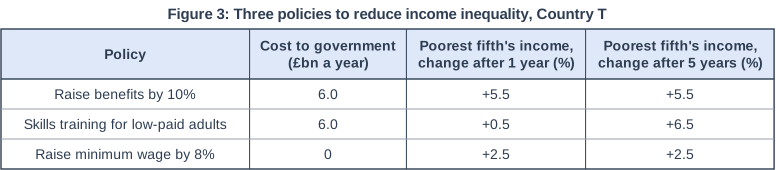
Figure 3 shows the government's estimates of the cost of each policy and its effect on the average income of the poorest fifth of households (invented data).
Using Figure 3, assess whether raising benefits for low-income households is the best way for the government of Country T to reduce income inequality.
Model answer
Raising benefits has clear strengths. In Country T, 55% of the poorest fifth's income comes from benefits, so raising benefits by 10% increases their average income by 5.5% straight away. This is much more than the other policies achieve after one year: 0.5% for skills training and 2.5% for the minimum wage. Benefits are well targeted, because they go directly to low-income households, and they help people who cannot work, such as carers, disabled people and pensioners, whom a higher minimum wage would not reach.
However, raising benefits has costs and weaknesses. It costs £6 billion a year, which must be paid for with higher taxes, more borrowing or cuts to other services, so there is an opportunity cost. If benefits are withdrawn as people earn more, higher benefits may reduce the incentive to work, and some people could stay in a poverty trap. Above all, it treats the symptom rather than the cause: 31% of adults in the poorest fifth have no qualifications, so their earning power stays low and they remain dependent on benefits.
Skills training tackles this cause. For the same cost of £6 billion, it is estimated to raise the poorest fifth's income by 6.5% after five years, more than the 5.5% from benefits, because workers gain the skills to earn higher wages, and it may reduce spending on benefits in future. But it is slow, adding only 0.5% after one year, and the estimate is uncertain, because people must complete the training and find better-paid jobs. Raising the minimum wage costs the government nothing and adds 2.5%, but it only helps people in work and could cost 40,000 jobs, which would make some of the poorest households poorer.
Overall, I do not think raising benefits is the best way on its own. It is the quickest and most certain way to help the poorest households, which matters if they are struggling now, but in the long run skills training raises their incomes by more and reduces their dependence on benefits. The best choice depends on whether the government cares most about the next year or the next five, and on how reliable the training estimate is. A combination - a smaller rise in benefits now while training is introduced - would probably reduce inequality the most.
Explanation
A Level 3 answer weighs the speed, cost and targeting of higher benefits against their effects on incentives and the fact that they do not tackle causes such as low skills, and compares them with the alternatives using the figures (for example 5.5% after one year against 6.5% after five years for training). The judgement should say what it depends on, such as the time period or the reliability of the estimates. Answers that discuss benefits without using the figure, or without weighing any alternative or drawback, are capped at 6 marks.