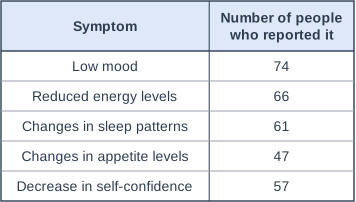
Researchers wanted to measure the symptoms of 120 adults with unipolar depression. Each participant completed a self-report questionnaire, rating how often in the past two weeks they had experienced low mood, reduced energy, changes in sleep, changes in appetite and a decrease in self-confidence, from 0 (never) to 3 (nearly every day).
Explain the strengths and weaknesses of using self-report questionnaires to measure the symptoms of unipolar depression. In your answer, refer to the study described above.
Model answer
Self-report questionnaires have several strengths for measuring the symptoms of unipolar depression. In this study, all 120 participants answered the same questions about the same five symptoms over the same two-week period, so the data are standardised and their scores can be compared directly. The 0 to 3 rating scale produces quantitative data that is quick to analyse, for example by calculating a mean rating for each symptom. Questionnaires are also efficient, so a large sample like this can be studied, which makes the findings easier to generalise. Most importantly, symptoms such as low mood and decreased self-confidence are internal experiences that only the person can report, so asking them directly is often the only way to measure these symptoms.
However, there are weaknesses. Participants may not answer honestly; for example, some may play down their low mood because of stigma, and there is no way of checking their answers, which reduces validity. Recalling how often they felt low over two weeks may also be inaccurate, especially as reduced concentration is a symptom of depression. Participants may interpret the questions differently, such as what counts as a 'change in sleep'. The rating scale also limits answers, so it cannot show why a participant's sleep or appetite changed or what their symptoms feel like.
Overall, self-report questionnaires are a practical and often necessary way to measure the symptoms of depression, but their validity is limited, and they could be combined with interviews or sleep diaries.
Explanation
Top answers apply each strength and weakness to the study, for example the standardised 0-3 ratings for 120 participants or the risk of under-reporting low mood because of stigma, and finish with a judgement. Generic points about questionnaires that could apply to any study limit the AO2 marks.