
Level:
Correct: 0
Incorrect: 0
Marks: 0/0
Exam Practice
Course:
Topics:
Edexcel A-Level Maths (Paper 1) Smart practice A mixed round aimed at your weak spots
Unit 1
Proof
Unit 2
Algebra and functions
Unit 3
Coordinate geometry in the (x, y) plane
Unit 4
Sequences and series
Unit 5
Trigonometry
Unit 6
Exponentials and logarithms
Unit 7
Differentiation
Unit 8
Integration
Unit 9
Numerical methods
Unit 10
Vectors
Avg
score:
–
Topics
done:
0/36

Integration using partial fractions

Practise 16 exam-style questions on Integration using partial fractions for Edexcel A-Level Maths (Paper 1). Write your answer as you would in the exam and get it marked in seconds against the mark scheme, point by point, with the Study Helper on hand if you get stuck.

  • 16 questions
  • 2–9 marks each
  • Instant marking
  • No sign-up needed
16 questions, marked as you go

Sample questions with model answers

Here are 4 of the questions in this topic, each with a model answer, an explanation of why it earns the marks and the mark scheme an examiner would use.

Question 1

3 marks

Ravi is asked to find the exact value of \(\displaystyle\int_3^4 \dfrac{5}{(x - 2)(x + 3)}\,dx\). His working is shown below.

Line 1: \(\dfrac{5}{(x - 2)(x + 3)} = \dfrac{1}{x - 2} - \dfrac{1}{x + 3}\)
Line 2: \(\displaystyle\int_3^4 \dfrac{5}{(x - 2)(x + 3)}\,dx = \left[\ln(x - 2) - \ln(x + 3)\right]_3^4\)
Line 3: \(= (\ln 2 - \ln 7) - (\ln 1 - \ln 6)\)
Line 4: \(= \ln 2 - \ln 7 - \ln 6\)
Line 5: \(= \ln\dfrac{1}{21}\)

Identify the line in which Ravi first makes an error and explain the error.
Find the correct exact value of the integral, giving your answer as a single logarithm.

Model answer

The error is in Line 4. Line 3 is correct, but \(-(\ln 1 - \ln 6) = -\ln 1 + \ln 6 = +\ln 6\), whereas Ravi wrote \(-\ln 6\).
Correct value: \((\ln 2 - \ln 7) - (0 - \ln 6) = \ln 2 - \ln 7 + \ln 6\)
\(= \ln\dfrac{2 \times 6}{7} = \ln\dfrac{12}{7}\)

Explanation

Lines 1 to 3 are correct: the partial fractions, the integral and the substituted limits. Subtracting the value at the lower limit, \(\ln 1 - \ln 6 = -\ln 6\), changes its sign, so \(\ln 6\) is added and the answer is \(\ln\dfrac{12}{7}\). This sign slip at the lower limit is an error that examiners' reports mention.

Mark scheme
  1. 1 mark

    B1 The first error is in Line 4: removing the bracket \(-(\ln 1 - \ln 6)\) gives \(+\ln 6\), not \(-\ln 6\) (subtracting \(-\ln 6\) means adding \(\ln 6\)). A correct value of \(\ln\dfrac{12}{7}\) with no working or explanation scores only the last 2 marks.

    An answer of \(\ln\dfrac{12}{7}\) with no working scores 2 marks: this mark needs Line 4 identified and the sign error explained. Do not accept a reason that blames Lines 1, 2 or 3, which are all correct. Accept equivalent explanations, e.g. "the minus sign in front of the bracket was not applied to \(-\ln 6\)".

  2. 1 mark

    M1 Removes the brackets correctly and combines the logarithms: \(\ln 2 - \ln 7 + \ln 6\) (or \(\ln 2 - \ln 7 - \ln 1 + \ln 6\)) leading to a single logarithm

  3. 1 mark

    A1 \(\ln\dfrac{12}{7}\)

    It must be a single logarithm: \(\ln 12 - \ln 7\) as the final answer is A0, as is a decimal only (awrt 0.539, i.e. [0.5385, 0.5395)).
Question 2

6 marks

Given that \(a\) is a positive constant, show that
\[\int \dfrac{1}{x^2 - a^2}\,dx = \dfrac{1}{2a}\ln\left|\dfrac{x - a}{x + a}\right| + c\]
Hence find the exact value of
\[\int_{3}^{4} \dfrac{1}{x^2 - 4}\,dx\]
giving your answer in the form \(p\ln q\), where \(p\) and \(q\) are rational numbers.

Model answer

\(x^2 - a^2 = (x - a)(x + a)\)
\(\dfrac{1}{(x - a)(x + a)} \equiv \dfrac{A}{x - a} + \dfrac{B}{x + a}\), so \(1 \equiv A(x + a) + B(x - a)\)
\(x = a\): \(1 = 2aA\), \(A = \dfrac{1}{2a}\); \(x = -a\): \(1 = -2aB\), \(B = -\dfrac{1}{2a}\)
\(\displaystyle\int \dfrac{1}{x^2 - a^2}\,dx = \dfrac{1}{2a}\ln\lvert x - a\rvert - \dfrac{1}{2a}\ln\lvert x + a\rvert + c = \dfrac{1}{2a}\ln\left|\dfrac{x - a}{x + a}\right| + c\)
With \(a = 2\): \(\displaystyle\int_3^4 \dfrac{1}{x^2 - 4}\,dx = \dfrac{1}{4}\left[\ln\left|\dfrac{x - 2}{x + 2}\right|\right]_3^4\)
\(= \dfrac{1}{4}\left(\ln\dfrac{2}{6} - \ln\dfrac{1}{5}\right) = \dfrac{1}{4}\ln\left(\dfrac{1}{3} \times 5\right) = \dfrac{1}{4}\ln\dfrac{5}{3}\)

Explanation

Factorise \(x^2 - a^2\) as a difference of two squares and find the partial fractions in terms of \(a\): the constants are \(\pm\dfrac{1}{2a}\). The two logarithms combine into one with the subtraction law. For the definite integral \(a = 2\), not 4, and a common slip is subtracting the logarithms the wrong way round when the limits are substituted.

Mark scheme
  1. 1 mark

    M1 Factorises \(x^2 - a^2 = (x - a)(x + a)\) and uses a correct method for partial fractions, e.g. \(1 \equiv A(x + a) + B(x - a)\) with \(x = a\) or \(x = -a\). An answer with no working scores 0 marks.

    An answer with no working scores 0 marks: the first result is a show that, and the second part must use it ("hence"), so \(\dfrac{1}{4}\ln\dfrac{5}{3}\) stated with no working scores nothing.

  2. 1 mark

    A1 \(A = \dfrac{1}{2a}\) and \(B = -\dfrac{1}{2a}\), i.e. \(\dfrac{1}{x^2 - a^2} \equiv \dfrac{1}{2a(x - a)} - \dfrac{1}{2a(x + a)}\)

    Both constants are needed for this mark.

  3. 1 mark

    M1 Integrates both terms to logarithms: \(\pm k\ln\lvert x - a\rvert \pm k\ln\lvert x + a\rvert\)

    Not dependent on the first M mark.

  4. 1 mark

    A1* \(\dfrac{1}{2a}\ln\lvert x - a\rvert - \dfrac{1}{2a}\ln\lvert x + a\rvert + c = \dfrac{1}{2a}\ln\left|\dfrac{x - a}{x + a}\right| + c\) cso

    The combination of the two logarithms with a law of logarithms must be seen, and the constant must appear. Restating the printed result earns nothing.

  5. 1 mark

    M1 Uses the result with \(a = 2\) and substitutes the limits 4 and 3, subtracting: \(\dfrac{1}{4}\left(\ln\dfrac{2}{6} - \ln\dfrac{1}{5}\right)\)

    Using \(a = 4\) (from the 4 in \(x^2 - 4\)) is M0. The limits may be substituted into the two separate logarithms.

  6. 1 mark

    A1 \(\dfrac{1}{4}\ln\dfrac{5}{3}\)

    Accept \(p = \dfrac{1}{4}\) and \(q = \dfrac{5}{3}\), and equivalent forms of \(p\ln q\) such as \(-\dfrac{1}{4}\ln\dfrac{3}{5}\). A decimal only (awrt 0.128, i.e. [0.1275, 0.1285)) is A0.

Question 3

7 marks

In this question you must show all stages of your working.
Solutions relying entirely on calculator technology are not acceptable.

\[\mathrm{f}(x) = \dfrac{4x^2 + 8x + 9}{(2x + 1)(x + 2)}, \quad x \geqslant 0\]
Given that \(\mathrm{f}(x)\) can be written in the form
\[\mathrm{f}(x) = A + \dfrac{B}{2x + 1} + \dfrac{C}{x + 2}\]
find the values of the constants \(A\), \(B\) and \(C\).
Hence find the exact value of \(\displaystyle\int_0^1 \mathrm{f}(x)\,dx\), giving your answer in the form \(a + b\ln 2 + c\ln 3\), where \(a\), \(b\) and \(c\) are integers.

Model answer

\(4x^2 + 8x + 9 \equiv A(2x + 1)(x + 2) + B(x + 2) + C(2x + 1)\)
Comparing \(x^2\) terms: \(4 = 2A\), so \(A = 2\)
\(x = -\tfrac{1}{2}\): \(1 - 4 + 9 = \tfrac{3}{2}B\), so \(B = 4\)
\(x = -2\): \(16 - 16 + 9 = -3C\), so \(C = -3\)
\(\displaystyle\int_0^1 \left(2 + \dfrac{4}{2x + 1} - \dfrac{3}{x + 2}\right) dx = \left[2x + 2\ln(2x + 1) - 3\ln(x + 2)\right]_0^1\)
\(= (2 + 2\ln 3 - 3\ln 3) - (0 + 2\ln 1 - 3\ln 2)\)
\(= 2 - \ln 3 + 3\ln 2 = 2 + 3\ln 2 - \ln 3\)

Explanation

The numerator and denominator have the same degree, so the fraction is improper and there is a constant term \(A = 2\) as well as the two partial fractions. The constant integrates to \(2x\), \(\dfrac{4}{2x + 1}\) to \(2\ln(2x + 1)\) and \(-\dfrac{3}{x + 2}\) to \(-3\ln(x + 2)\). Common errors are leaving out \(A\), not halving when integrating \(\dfrac{4}{2x + 1}\) and not using \(\ln 1 = 0\) at the lower limit.

Mark scheme
  1. 1 mark

    B1 \(A = 2\). An answer with no working scores 0 marks.

    An answer with no working scores 0 marks: the question demands working, so \(2 + 3\ln 2 - \ln 3\) (or awrt 2.981, i.e. [2.9805, 2.9815)) with no working scores nothing. \(A = 2\) may come from algebraic division or from comparing the \(x^2\) terms (\(4 = 2A\)).

  2. 1 mark

    M1 Correct method for \(B\) or \(C\), e.g. \(4x^2 + 8x + 9 \equiv A(2x + 1)(x + 2) + B(x + 2) + C(2x + 1)\) with \(x = -\tfrac{1}{2}\) or \(x = -2\), or dividing first to get \(2 + \dfrac{-2x + 5}{(2x + 1)(x + 2)}\) and splitting the remainder

  3. 1 mark

    A1 \(B = 4\) and \(C = -3\)

    Both values are needed for this mark.

  4. 1 mark

    M1 Integrates to the form \(\alpha x + \beta\ln(2x + 1) + \gamma\ln(x + 2)\)

    Follow through their constants.

  5. 1 mark

    A1ft \(2x + 2\ln(2x + 1) - 3\ln(x + 2)\), ft their \(A\), \(B\) and \(C\) (\(Ax + \dfrac{B}{2}\ln(2x + 1) + C\ln(x + 2)\))

    A common error is \(4\ln(2x + 1)\), not dividing by the coefficient of \(x\): A0.

  6. 1 mark

    M1 (dM1) Substitutes 1 and 0 and subtracts: \((2 + 2\ln 3 - 3\ln 3) - (0 + 2\ln 1 - 3\ln 2)\)

    Depends on the M mark for integrating.

  7. 1 mark

    A1 \(2 + 3\ln 2 - \ln 3\) cso

    Accept \(a = 2\), \(b = 3\), \(c = -1\). An answer such as \(2 - \ln 3 + 3\ln 2 - 2\ln 1\) is fine once simplified to the form asked; \(2 + \ln\dfrac{8}{3}\) not in the form asked, or a decimal only, is A0. A common error is leaving out the constant \(A\), which loses the 2.

Question 4

9 marks

In this question you must show all stages of your working.
Solutions relying entirely on calculator technology are not acceptable.

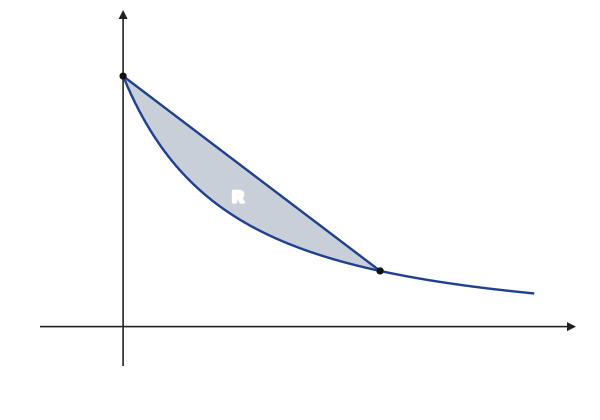
Figure 1 shows a sketch of part of the curve \(C\) with equation
\[y = \dfrac{12}{(x + 1)(x + 4)}, \quad x \geqslant 0\]
The points \(A(0, 3)\) and \(B\left(2, \tfrac{2}{3}\right)\) lie on \(C\).
The finite region \(R\), shown shaded in Figure 1, is bounded by \(C\) and the line segment \(AB\).

Find the exact area of \(R\), giving your answer in the form \(p + q\ln 2\), where \(p\) and \(q\) are rational numbers.

Figure 1: a sketch of part of the curve C for x greater than or equal to 0. The curve starts at the point A on the positive y-axis and decreases, levelling off as x increases. B is a point on the curve to the right of A. The straight line segment AB lies above the curve, and the region R between the segment AB and the curve is shaded.

Model answer

\(\dfrac{12}{(x + 1)(x + 4)} \equiv \dfrac{A}{x + 1} + \dfrac{B}{x + 4}\): \(x = -1\) gives \(A = 4\), \(x = -4\) gives \(B = -4\)
Area under \(C\) \(= \displaystyle\int_0^2 \left(\dfrac{4}{x + 1} - \dfrac{4}{x + 4}\right) dx = \left[4\ln(x + 1) - 4\ln(x + 4)\right]_0^2\)
\(= (4\ln 3 - 4\ln 6) - (4\ln 1 - 4\ln 4) = 4\ln\dfrac{3 \times 4}{6} = 4\ln 2\)
Area of trapezium under \(AB\) \(= \tfrac12\left(3 + \tfrac23\right) \times 2 = \dfrac{11}{3}\)
The curve lies below \(AB\), so area of \(R = \dfrac{11}{3} - 4\ln 2\)

Explanation

The region is the trapezium under \(AB\) minus the area under the curve, because the curve lies below the segment between \(A\) and \(B\). The area under the curve uses partial fractions: \(\displaystyle\int_0^2 \dfrac{12}{(x + 1)(x + 4)}\,dx = 4\ln 2\). Common errors are finding only the area under the curve and using the wrong parallel sides for the trapezium, which are 3 and \(\dfrac{2}{3}\) with width 2.

Mark scheme
  1. 1 mark

    M1 Correct method for the partial fractions of \(\dfrac{12}{(x + 1)(x + 4)}\). An answer with no working scores 0 marks.

    An answer with no working scores 0 marks: the question demands working, so \(\dfrac{11}{3} - 4\ln 2\) (or awrt 0.894, i.e. [0.8935, 0.8945)) with no working scores nothing.

  2. 1 mark

    A1 \(\dfrac{4}{x + 1} - \dfrac{4}{x + 4}\)

  3. 1 mark

    M1 Integrates to the form \(\alpha\ln(x + 1) + \beta\ln(x + 4)\)

    Not dependent on the first M mark.

  4. 1 mark

    A1 \(4\ln(x + 1) - 4\ln(x + 4)\) oe

  5. 1 mark

    M1 (dM1) Substitutes 2 and 0 and subtracts: \(4(\ln 3 - \ln 6) - 4(\ln 1 - \ln 4)\)

    Depends on the second M mark (the integration).

  6. 1 mark

    A1 Area under the curve from \(x = 0\) to \(x = 2\) is \(4\ln 2\)

    Accept \(\ln 16\) or any exact equivalent.

  7. 1 mark

    M1 Finds the area under the segment \(AB\) from \(x = 0\) to \(x = 2\): trapezium \(\tfrac12\left(3 + \tfrac23\right)(2)\), or \(\displaystyle\int_0^2 \left(3 - \tfrac76x\right) dx\)

    Alternative method: \(\displaystyle\int_0^2 \left(3 - \tfrac76x - \dfrac{12}{(x + 1)(x + 4)}\right) dx\) in one integral scores the same marks: this M1 and the next A1 for the line \(y = 3 - \tfrac76x\) and the value \(\tfrac{11}{3}\) of its integral.

  8. 1 mark

    A1 \(\dfrac{11}{3}\)

  9. 1 mark

    A1 Area of \(R = \dfrac{11}{3} - 4\ln 2\) cso

    Requires all previous marks. Accept \(p = \dfrac{11}{3}\), \(q = -4\). A decimal only is A0. A common error is to give only the area under the curve (\(4\ln 2\)) or to subtract the wrong way round, giving a negative area.

Ready to try the rest? Every answer you write is marked against the mark scheme, so you can see exactly where the marks are.

Study Helper Hints first, answers after you try

Stuck on this one? Ask for a hint and I’ll point you in the right direction, without giving the answer away. Once you’ve checked your answer, I’ll show you how the marks are awarded.