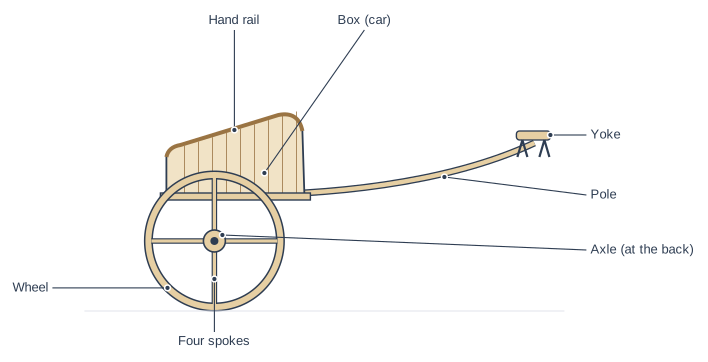
Source A is a drawing of a Mycenaean chariot (Figure 1).
To what extent were chariots more important to the Mycenaeans as status symbols than as weapons of war? Use Source A as a starting point and your own knowledge.
Model answer
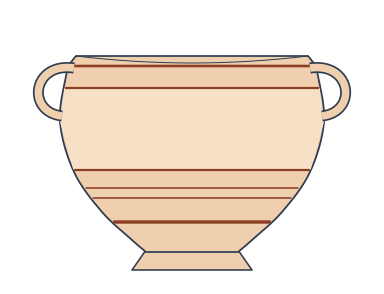
Source A shows a light two-wheeled chariot with four-spoked wheels, a small box and a pole and yoke for two horses. Such a vehicle was very expensive: it needed trained horses, skilled craftsmen and constant upkeep, so only the elite could own one, and much of the evidence presents chariots as status symbols. The carved stelae over the shaft graves of Grave Circle A show men in chariots, linking the vehicle with the ruling elite even in death. A fresco from Tiryns shows two women riding in a chariot, probably to a hunt, and a gold ring from the shaft graves shows a stag being hunted from a chariot. Chariots were painted on kraters used at feasts, and in Homer they are raced at the funeral games of Patroclus.
On the other hand, the palace records treat chariots as military equipment. Linear B tablets at Knossos list chariots together with horses and corslets, and tablets at Pylos record chariot wheels, which suggests the palaces maintained chariot forces. The Dendra panoply, with its heavy plates and high neck guard, seems designed for a warrior who rode in a chariot rather than fought on foot. The light design in Source A suits speed and manoeuvre in battle.
However, Greece is rocky and mountainous, with few large plains, so massed chariot charges like those of the Egyptians and Hittites were probably impossible. Chariots were more likely used to carry elite warriors to and around the battlefield, as in Homer, where heroes ride to battle and then dismount to fight on foot. Even in war, then, the chariot was partly a mark of rank.
Overall, chariots were both, but for the Mycenaeans they were more important as symbols of status and as transport for the elite than as decisive weapons of war, even though the palaces kept them as part of their military equipment.
Explanation
Strong answers combine art, Linear B, burials and Homer, and consider geography as a reason why chariots may have been less useful in Greek warfare. A judgement that explains how status and military use overlapped earns the top level.