Question 1
1 markSodium fluoride, NaF, is an ionic compound used in toothpaste.
Electron arrangements: sodium 2.8.1; fluorine 2.7
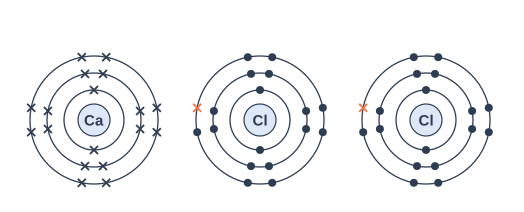
In a dot-and-cross diagram of sodium fluoride, the electrons from sodium are drawn as crosses and the electrons from fluorine are drawn as dots. Only the outer shells are shown.
What is drawn in the outer shell of the fluoride ion?
Choose your answer.
- A 8 dots and 0 crosses
- B 7 dots and 1 cross
- C 6 dots and 2 crosses
- D 1 dot and 7 crosses
Model answer
B (7 dots and 1 cross)
Explanation
The dots and crosses show where each electron came from. Fluorine (2.7) has seven outer electrons of its own, drawn as dots, and gains the one outer electron of a sodium atom (2.8.1), drawn as a cross. The fluoride ion, F⁻, then has a full outer shell of eight electrons.
Mark scheme
-
1 mark
B / 7 dots and 1 cross
The only correct answer is B: the fluorine atom keeps its own seven outer electrons (dots) and gains one electron from the sodium atom (a cross), giving the fluoride ion eight outer electrons. A is not correct because it leaves out the electron transferred from sodium (and fluorine has only seven outer electrons of its own); C is not correct because a sodium atom has only one outer electron to transfer; D is not correct because it swaps the dots and the crosses. ALLOW the letter or the option. If more than one option is given, do not award the mark.