'The dropping of the atomic bomb was the main reason relations between the USA and the USSR worsened in 1945.'
How far do you agree with this statement?
Explain your answer.
[16 marks] [SPaG 4 marks]
Model answer
The dropping of the atomic bomb in August 1945 certainly made relations between the USA and the USSR worse, because it increased Soviet suspicion and started an arms race. However, I do not think it was the main reason relations worsened in 1945. By the time the bombs were dropped, relations had already been damaged by disputes over Poland and eastern Europe, the change of American leader and the defeat of the common enemy. The bomb deepened existing tensions rather than creating them.
The atomic bomb did harm relations. The Manhattan Project had been kept secret from the USSR throughout the war, even though it was an ally. When the bomb was successfully tested on 16 July 1945, Truman became more confident in his dealings with Stalin at Potsdam, and on 24 July he told Stalin only that the USA had 'a new weapon of unusual destructive force'. Stalin, who knew about the bomb from Soviet spies, was not fooled. After Hiroshima on 6 August and Nagasaki on 9 August, Japan surrendered and the USA occupied it alone, refusing the USSR any role. Stalin suspected that the bombs had been dropped partly to intimidate the USSR, and in August 1945 he set up a special committee under Beria to build a Soviet bomb as quickly as possible. Some American leaders, such as Byrnes, hoped that the bomb would make the USSR more manageable, but at the Council of Foreign Ministers in London in September 1945 the talks broke down. Even the Secretary of War, Stimson, warned Truman that holding the bomb 'rather ostentatiously on our hip' would increase Soviet distrust.
However, relations had been worsening for months before August 1945. The most important cause was Soviet policy in eastern Europe, especially Poland. At Yalta Stalin had agreed to reorganise Poland's communist-dominated government and hold free elections, but in March 1945 sixteen Polish underground leaders were arrested, and in Romania the Soviets imposed a pro-communist government. Western leaders saw these as broken promises. On 12 May Churchill warned Truman that an 'iron curtain' had come down in Europe.
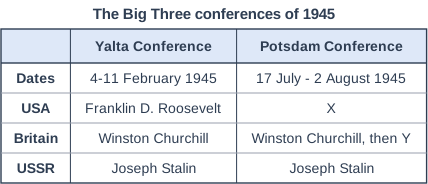
The change of leaders also mattered. Roosevelt, who believed he could work with Stalin, died on 12 April 1945. Truman was more suspicious and spoke bluntly to Molotov about Poland on 23 April, and in May Lend-Lease aid to the USSR was suddenly cut back. At the same time, Germany's surrender on 8 May removed the common enemy that had held the alliance together, so disputes over Germany's future and reparations came to the fore. At Potsdam the Allies argued over Stalin's demand for reparations and over Poland's western border on the Oder-Neisse line. Underlying all of this were the ideological differences between capitalism and communism, which led each side to assume the worst about the other.
Overall, I disagree with the statement. The atomic bomb made relations worse by increasing Soviet suspicion, changing the balance of power and starting an arms race that would dominate the Cold War. But it came after relations had already been damaged by the dispute over Poland and eastern Europe, which I think was the main reason. The bomb added a dangerous new element to the tension, but it was Soviet control of eastern Europe, and the Western reaction to it, that first broke the trust of the wartime alliance.
Explanation
The bomb increased Soviet suspicion and began the arms race, but relations were already worsening over Poland, eastern Europe, Germany and the change of leaders before August 1945. Level 4 needs a sustained judgement that weighs the bomb against these other factors, and considering timing is a strong way to do this.