Photo description: communication and the world around us
Practise 12 exam-style questions on Photo description: communication and the world around us for AQA GCSE Spanish (Foundation Writing). Write your answer as you would in the exam and get it marked in seconds against the mark scheme, point by point, with the Study Helper on hand if you get stuck.
12 questions
10 marks each
Instant marking
No sign-up needed
12 questions, marked as you go
Sample questions with model answers
Here are 4 of the questions in this topic, each with a model answer, an explanation of why it earns the marks and the mark scheme an examiner would use.
Question 1
10 marks
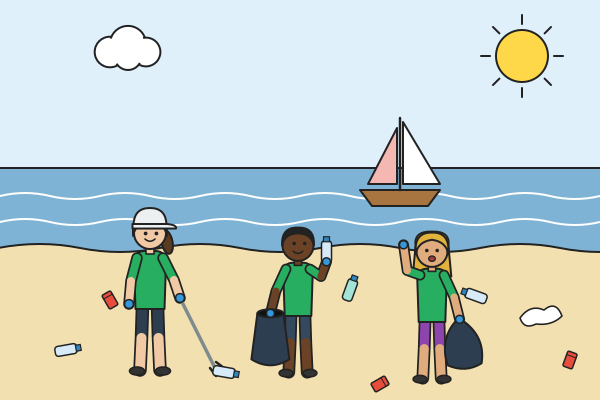
You post this picture of a beach clean-up on the blog of an environment club in Ecuador.
What is in this photo? Write five sentences in Spanish.
Model answer
Hay tres jóvenes en la playa. Hace sol y hay un barco en el mar. Los jóvenes llevan camisetas verdes. El chico tiene una botella de plástico y una bolsa negra. Me gusta la foto porque los jóvenes limpian la playa.
Explanation
Each sentence needs a conjugated verb and must say something that is, or could be, in the picture: Hay tres jóvenes, Limpian la playa, Llevan camisetas verdes. Useful here are hace sol for the weather, llevan + clothes, tiene + object and the colours after the noun (una bolsa negra, camisetas verdes). An opinion scores only if it says something about the picture (Me gusta la foto porque limpian la playa), not Me gusta la foto on its own. Common errors are es sol instead of hace sol, a verb in the infinitive (limpiar la playa) and a noun with no verb (mucha basura), which score 1 mark.
Mark scheme
2 marks
Levels of response: sentence 1 (AO2, 2 marks). Level 2 (2 marks): the relevant message is clearly communicated. Level 1 (1 mark): the message is relevant but has some ambiguity and causes a delay in communication. 0 marks: the message is irrelevant or cannot be understood.
Each of the five sentences is marked separately, as a whole, and must be about the picture. 2 marks: a sentence with an appropriate conjugated verb; the same structure may be repeated with different nouns (hay ...); any person of the verb and any tense are accepted; there may be errors as long as the message is unambiguous; a figure may be written for a number; anything that could possibly be true of the picture is accepted. 1 mark: an infinitive in an otherwise appropriate sentence (el chico jugar al fútbol); a noun phrase without a verb (una mesa; nueve personas); an error that causes ambiguity or delay (they are eating coffee); a long sentence where one part communicates and another does not. 0 marks: a single word (mesa; nueve); an inappropriate verb (quiero una casa; soy un libro); something clearly false about the picture; an opinion about the photo that says nothing about what is in it (me gusta la foto = 0; me gusta la foto porque hace sol = 2). A missing or wrong accent or ñ does not matter unless it makes the message ambiguous. Any standard variety of Spanish is accepted. Students' own ways of referring to themselves and others (pronouns, gendered language, agreements) are credited. Any combination of appropriate sentences is acceptable: the examples given under each sentence may be used for any of the five. Examples for this picture: 2 marks - Hay tres jóvenes en la playa. / Veo a dos chicas y a un chico. 1 mark - tres jóvenes en la playa. / dos chicas y un chico. 0 marks - tres. / Hay cinco personas (clearly false: there are three).
2 marks
Levels of response: sentence 2 (AO2, 2 marks). Level 2 (2 marks): the relevant message is clearly communicated. Level 1 (1 mark): the message is relevant but has some ambiguity and causes a delay in communication. 0 marks: the message is irrelevant or cannot be understood.
As sentence 1. Examples: 2 marks - Están en la playa. / Hace sol. / Hay un barco en el mar. 1 mark - estar en la playa. / es sol. 0 marks - playa. / Llueve mucho (clearly false: it is sunny).
2 marks
Levels of response: sentence 3 (AO2, 2 marks). Level 2 (2 marks): the relevant message is clearly communicated. Level 1 (1 mark): the message is relevant but has some ambiguity and causes a delay in communication. 0 marks: the message is irrelevant or cannot be understood.
As sentence 1. Examples: 2 marks - Limpian la playa. / La chica recoge una botella. / Reciclamos el plástico. 1 mark - limpiar la playa. / la chica con una botella. 0 marks - limpiar. / Los jóvenes nadan en el mar (clearly false).
2 marks
Levels of response: sentence 4 (AO2, 2 marks). Level 2 (2 marks): the relevant message is clearly communicated. Level 1 (1 mark): the message is relevant but has some ambiguity and causes a delay in communication. 0 marks: the message is irrelevant or cannot be understood.
As sentence 1. Examples: 2 marks - Llevan camisetas verdes. / El chico tiene una bolsa negra. / Hay muchas botellas de plástico. 1 mark - camisetas verdes. / llevar una camiseta verde. 0 marks - verde. / Estoy una camiseta (inappropriate verb).
2 marks
Levels of response: sentence 5 (AO2, 2 marks). Level 2 (2 marks): the relevant message is clearly communicated. Level 1 (1 mark): the message is relevant but has some ambiguity and causes a delay in communication. 0 marks: the message is irrelevant or cannot be understood.
As sentence 1. Examples: 2 marks - Hay mucha basura en la playa. / Me gusta la foto porque los jóvenes limpian la playa. / Es importante reciclar. 1 mark - mucha basura. / me gusta porque limpiar. 0 marks - Me gusta la foto (nothing about what is in it). / Me gusta el fútbol (not about the picture).
Question 2
10 marks
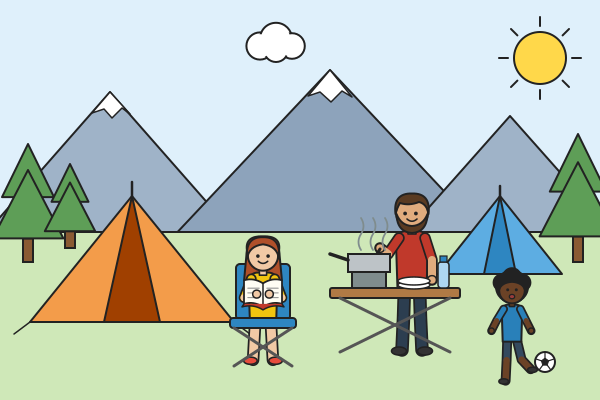
You are on a camping holiday, and you send this picture to your friend in Chile.
What is in this photo? Write five sentences in Spanish.
Model answer
Hay un hombre, una chica y un chico en el camping. Hay dos tiendas y tres árboles. La chica lee un libro. El chico juega al fútbol. Me encanta la foto porque hace sol y las montañas son muy bonitas.
Explanation
Each sentence scores 2 marks if it has a conjugated verb and fits the picture: Hay dos tiendas, La chica lee un libro, El chico juega al fútbol. Remember jugar al + sport, hace sol (not es sol) for the weather, and agreement of adjectives (las montañas son bonitas, una camiseta amarilla). An opinion must be linked to the picture to score (me encanta la foto porque hace sol). An infinitive (jugar al fútbol) or a phrase with no verb (dos tiendas) scores 1 mark; a single word scores 0.
Mark scheme
2 marks
Levels of response: sentence 1 (AO2, 2 marks). Level 2 (2 marks): the relevant message is clearly communicated. Level 1 (1 mark): the message is relevant but has some ambiguity and causes a delay in communication. 0 marks: the message is irrelevant or cannot be understood.
Each of the five sentences is marked separately, as a whole, and must be about the picture. 2 marks: a sentence with an appropriate conjugated verb; the same structure may be repeated with different nouns (hay ...); any person of the verb and any tense are accepted; there may be errors as long as the message is unambiguous; a figure may be written for a number; anything that could possibly be true of the picture is accepted. 1 mark: an infinitive in an otherwise appropriate sentence (el chico jugar al fútbol); a noun phrase without a verb (una mesa; nueve personas); an error that causes ambiguity or delay (they are eating coffee); a long sentence where one part communicates and another does not. 0 marks: a single word (mesa; nueve); an inappropriate verb (quiero una casa; soy un libro); something clearly false about the picture; an opinion about the photo that says nothing about what is in it (me gusta la foto = 0; me gusta la foto porque hace sol = 2). A missing or wrong accent or ñ does not matter unless it makes the message ambiguous. Any standard variety of Spanish is accepted. Students' own ways of referring to themselves and others (pronouns, gendered language, agreements) are credited. Any combination of appropriate sentences is acceptable: the examples given under each sentence may be used for any of the five. Examples for this picture: 2 marks - Hay tres personas. / Es una familia. / El padre tiene barba. 1 mark - tres personas. / una familia en el camping. 0 marks - familia. / Hay cuatro niños (clearly false).
2 marks
Levels of response: sentence 2 (AO2, 2 marks). Level 2 (2 marks): the relevant message is clearly communicated. Level 1 (1 mark): the message is relevant but has some ambiguity and causes a delay in communication. 0 marks: the message is irrelevant or cannot be understood.
As sentence 1. Examples (accept tienda or carpa for tent; camping or campamento): 2 marks - Están en un camping. / Hay montañas y árboles. / Hay una tienda naranja y una tienda azul. 1 mark - estar en un camping. / dos tiendas. 0 marks - montaña. / Están en la ciudad (clearly false).
2 marks
Levels of response: sentence 3 (AO2, 2 marks). Level 2 (2 marks): the relevant message is clearly communicated. Level 1 (1 mark): the message is relevant but has some ambiguity and causes a delay in communication. 0 marks: the message is irrelevant or cannot be understood.
As sentence 1. Examples: 2 marks - El hombre prepara la comida. / El chico juega al fútbol. / La chica lee un libro. 1 mark - el chico jugar al fútbol. / la chica con un libro. 0 marks - leer. / La chica nada en el río (clearly false).
2 marks
Levels of response: sentence 4 (AO2, 2 marks). Level 2 (2 marks): the relevant message is clearly communicated. Level 1 (1 mark): the message is relevant but has some ambiguity and causes a delay in communication. 0 marks: the message is irrelevant or cannot be understood.
As sentence 1. Examples: 2 marks - La chica lleva una camiseta amarilla. / El hombre lleva una camisa roja. / El chico lleva una camiseta azul. 1 mark - camiseta amarilla. / llevar una camiseta azul. 0 marks - amarilla. / Estoy una camiseta (inappropriate verb).
2 marks
Levels of response: sentence 5 (AO2, 2 marks). Level 2 (2 marks): the relevant message is clearly communicated. Level 1 (1 mark): the message is relevant but has some ambiguity and causes a delay in communication. 0 marks: the message is irrelevant or cannot be understood.
As sentence 1. Examples: 2 marks - Hace sol. / Hace buen tiempo en las montañas. / Me gusta la foto porque me encanta el camping. 1 mark - es sol. / buen tiempo. 0 marks - Me gusta la foto (nothing about what is in it). / Llueve (clearly false: it is sunny).
Question 3
10 marks
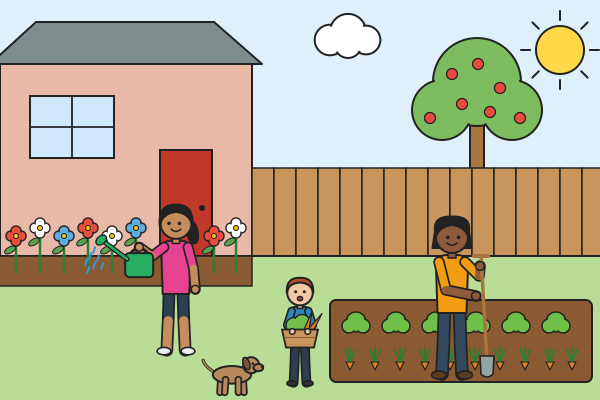
You share this picture of a weekend at home with your friend in Costa Rica.
What is in this photo? Write five sentences in Spanish.
Model answer
Hay tres personas y un perro en el jardín. Hace sol y hay un árbol con manzanas rojas. La mujer cuida las flores. El chico tiene muchas verduras. Me gusta el jardín porque es grande y muy bonito.
Explanation
Each sentence scores 2 marks when it has a conjugated verb and fits the picture, for example Hay tres personas or La mujer cuida las flores. Useful language: hay + noun, hace sol, trabajar en el jardín, cuidar las flores, un árbol con manzanas, and adjectives that agree (manzanas rojas, flores bonitas). An opinion needs a reason about the picture (me gusta el jardín porque hay muchas flores). A phrase without a verb (manzanas rojas) or an infinitive (trabajar en el jardín) scores 1 mark, and a single word scores 0.
Mark scheme
2 marks
Levels of response: sentence 1 (AO2, 2 marks). Level 2 (2 marks): the relevant message is clearly communicated. Level 1 (1 mark): the message is relevant but has some ambiguity and causes a delay in communication. 0 marks: the message is irrelevant or cannot be understood.
Each of the five sentences is marked separately, as a whole, and must be about the picture. 2 marks: a sentence with an appropriate conjugated verb; the same structure may be repeated with different nouns (hay ...); any person of the verb and any tense are accepted; there may be errors as long as the message is unambiguous; a figure may be written for a number; anything that could possibly be true of the picture is accepted. 1 mark: an infinitive in an otherwise appropriate sentence (el chico jugar al fútbol); a noun phrase without a verb (una mesa; nueve personas); an error that causes ambiguity or delay (they are eating coffee); a long sentence where one part communicates and another does not. 0 marks: a single word (mesa; nueve); an inappropriate verb (quiero una casa; soy un libro); something clearly false about the picture; an opinion about the photo that says nothing about what is in it (me gusta la foto = 0; me gusta la foto porque hace sol = 2). A missing or wrong accent or ñ does not matter unless it makes the message ambiguous. Any standard variety of Spanish is accepted. Students' own ways of referring to themselves and others (pronouns, gendered language, agreements) are credited. Any combination of appropriate sentences is acceptable: the examples given under each sentence may be used for any of the five. Examples for this picture: 2 marks - Hay tres personas. / Hay una familia. / Hay un perro marrón. 1 mark - una familia en el jardín. / tres personas y un perro. 0 marks - perro. / Hay dos perros (clearly false: there is one).
2 marks
Levels of response: sentence 2 (AO2, 2 marks). Level 2 (2 marks): the relevant message is clearly communicated. Level 1 (1 mark): the message is relevant but has some ambiguity and causes a delay in communication. 0 marks: the message is irrelevant or cannot be understood.
As sentence 1. Examples: 2 marks - Están en el jardín. / La casa es bonita. / Hay muchas flores. 1 mark - estar en el jardín. / una casa con una puerta roja. 0 marks - jardín. / Están en el colegio (clearly false).
2 marks
Levels of response: sentence 3 (AO2, 2 marks). Level 2 (2 marks): the relevant message is clearly communicated. Level 1 (1 mark): the message is relevant but has some ambiguity and causes a delay in communication. 0 marks: the message is irrelevant or cannot be understood.
As sentence 1. Examples: 2 marks - La mujer cuida las flores (accept riega las flores). / El hombre trabaja en el jardín. / El chico tiene muchas verduras. 1 mark - trabajar en el jardín. / el hombre con las verduras. 0 marks - trabajar. / El hombre lee un libro (clearly false).
2 marks
Levels of response: sentence 4 (AO2, 2 marks). Level 2 (2 marks): the relevant message is clearly communicated. Level 1 (1 mark): the message is relevant but has some ambiguity and causes a delay in communication. 0 marks: the message is irrelevant or cannot be understood.
As sentence 1. Examples: 2 marks - Hay un árbol con manzanas rojas. / El hombre lleva una camiseta naranja. / La puerta es roja. 1 mark - manzanas rojas. / llevar una camiseta naranja. 0 marks - manzana. / Soy una manzana (inappropriate verb).
2 marks
Levels of response: sentence 5 (AO2, 2 marks). Level 2 (2 marks): the relevant message is clearly communicated. Level 1 (1 mark): the message is relevant but has some ambiguity and causes a delay in communication. 0 marks: the message is irrelevant or cannot be understood.
As sentence 1. Examples: 2 marks - Hace sol. / Me gusta el jardín porque hay muchas flores. / Es sano comer verduras. 1 mark - buen tiempo. / jardín bonito. 0 marks - Me gusta la foto (nothing about what is in it). / Llueve (clearly false: it is sunny).
Question 4
10 marks
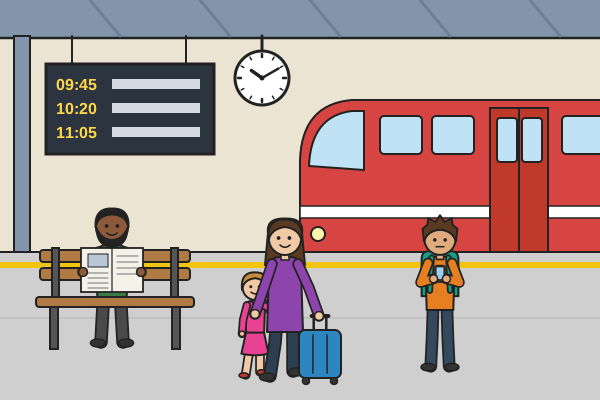
You are going on a train journey, and you send this picture from the station to your friend in Venezuela.
What is in this photo? Write five sentences in Spanish.
Model answer
Hay cuatro personas en la estación. Son las diez y diez. Un hombre lee el periódico en un banco. La mujer tiene una maleta azul. Me gusta la foto porque me encanta viajar en tren.
Explanation
Each sentence earns 2 marks when it has a conjugated verb and fits the picture, for example Hay cuatro personas or Un hombre lee el periódico. The clock and the board let you give a time: son las diez y diez, or hay un tren a las diez y veinte. Other useful structures are esperar el tren, lleva una mochila and tiene una maleta azul. A verbless phrase (maleta azul) or an infinitive (esperar el tren) scores 1 mark, a single word scores 0, and so does something not in the picture.
Mark scheme
2 marks
Levels of response: sentence 1 (AO2, 2 marks). Level 2 (2 marks): the relevant message is clearly communicated. Level 1 (1 mark): the message is relevant but has some ambiguity and causes a delay in communication. 0 marks: the message is irrelevant or cannot be understood.
Each of the five sentences is marked separately, as a whole, and must be about the picture. 2 marks: a sentence with an appropriate conjugated verb; the same structure may be repeated with different nouns (hay ...); any person of the verb and any tense are accepted; there may be errors as long as the message is unambiguous; a figure may be written for a number; anything that could possibly be true of the picture is accepted. 1 mark: an infinitive in an otherwise appropriate sentence (el chico jugar al fútbol); a noun phrase without a verb (una mesa; nueve personas); an error that causes ambiguity or delay (they are eating coffee); a long sentence where one part communicates and another does not. 0 marks: a single word (mesa; nueve); an inappropriate verb (quiero una casa; soy un libro); something clearly false about the picture; an opinion about the photo that says nothing about what is in it (me gusta la foto = 0; me gusta la foto porque hay un tren rojo = 2). A missing or wrong accent or ñ does not matter unless it makes the message ambiguous. Any standard variety of Spanish is accepted. Students' own ways of referring to themselves and others (pronouns, gendered language, agreements) are credited. Any combination of appropriate sentences is acceptable: the examples given under each sentence may be used for any of the five. Examples for this picture: 2 marks - Hay cuatro personas. / Hay una madre con su hija. / Veo a un hombre en un banco. 1 mark - cuatro personas en la estación. / una madre y una hija. 0 marks - cuatro. / Hay diez personas (clearly false: there are four).
2 marks
Levels of response: sentence 2 (AO2, 2 marks). Level 2 (2 marks): the relevant message is clearly communicated. Level 1 (1 mark): the message is relevant but has some ambiguity and causes a delay in communication. 0 marks: the message is irrelevant or cannot be understood.
As sentence 1. Examples: 2 marks - Están en la estación. / Hay un tren rojo. / Son las diez y diez. 1 mark - un tren rojo. / estar en la estación. 0 marks - tren. / Están en el aeropuerto (clearly false).
2 marks
Levels of response: sentence 3 (AO2, 2 marks). Level 2 (2 marks): the relevant message is clearly communicated. Level 1 (1 mark): the message is relevant but has some ambiguity and causes a delay in communication. 0 marks: the message is irrelevant or cannot be understood.
As sentence 1. Examples (accept móvil, celular or teléfono): 2 marks - El hombre lee el periódico. / El chico mira su móvil. / Esperan el tren. 1 mark - esperar el tren. / el hombre con un periódico. 0 marks - leer. / El hombre come una hamburguesa (clearly false).
2 marks
Levels of response: sentence 4 (AO2, 2 marks). Level 2 (2 marks): the relevant message is clearly communicated. Level 1 (1 mark): the message is relevant but has some ambiguity and causes a delay in communication. 0 marks: the message is irrelevant or cannot be understood.
As sentence 1. Examples: 2 marks - La niña lleva un vestido rosa. / El chico lleva una mochila. / La maleta es azul. 1 mark - maleta azul. / llevar una mochila. 0 marks - azul. / Estoy una maleta (inappropriate verb).
2 marks
Levels of response: sentence 5 (AO2, 2 marks). Level 2 (2 marks): the relevant message is clearly communicated. Level 1 (1 mark): the message is relevant but has some ambiguity and causes a delay in communication. 0 marks: the message is irrelevant or cannot be understood.
As sentence 1. Examples: 2 marks - Hay un tren a las diez y veinte. / Me gusta viajar en tren porque es rápido. / Van de vacaciones (could be true). 1 mark - tren a las diez y veinte. / viajar en tren. 0 marks - Me gusta la foto (nothing about what is in it). / Me gusta el fútbol (not about the picture).
Ready to try the rest? Every answer you write is marked against the mark scheme, so you can see exactly where the marks are.
Ctrl + Enter to check
Study HelperHints first, answers after you try
Stuck on this one? Ask for a hint and I’ll point you in the right direction, without giving the answer away. Once you’ve checked your answer, I’ll show you how the marks are awarded.