
Level:
Correct: 0
Incorrect: 0
Marks: 0/0
Exam Practice
Course:
Topics:
Edexcel A-Level Maths (Paper 2) Smart practice A mixed round aimed at your weak spots
Unit 1
Proof
Unit 2
Algebra and functions
Unit 3
Coordinate geometry in the (x, y) plane
Unit 4
Sequences and series
Unit 5
Trigonometry
Unit 6
Exponentials and logarithms
Unit 7
Differentiation
Unit 8
Integration
Unit 9
Numerical methods
Unit 10
Vectors
Avg
score:
–
Topics
done:
0/36

Graphs of functions, modulus and proportion

Practise 17 exam-style questions on Graphs of functions, modulus and proportion for Edexcel A-Level Maths (Paper 2). Write your answer as you would in the exam and get it marked in seconds against the mark scheme, point by point, with the Study Helper on hand if you get stuck.

  • 17 questions
  • 3–10 marks each
  • Instant marking
  • No sign-up needed
17 questions, marked as you go

Sample questions with model answers

Here are 4 of the questions in this topic, each with a model answer, an explanation of why it earns the marks and the mark scheme an examiner would use.

Question 1

4 marks

The variable \(y\) is directly proportional to \(x^3\), and \(y = 54\) when \(x = 3\).

Find \(y\) in terms of \(x\).

When the value of \(x\) is increased by 5, the value of \(y\) is multiplied by 8. Find the original value of \(x\).

Model answer

\(y = kx^3\); \(54 = 27k\), so \(k = 2\) and \(y = 2x^3\)
\(2(x + 5)^3 = 8 \times 2x^3\)
\((x + 5)^3 = 8x^3 = (2x)^3\)
\(x + 5 = 2x\), so \(x = 5\)
(Check: when \(x = 5\), \(y = 250\), and when \(x = 10\), \(y = 2000 = 8 \times 250\).)

Explanation

Direct proportion to \(x^3\) means \(y = kx^3\), and the given pair of values fixes \(k = 2\). Multiplying \(y\) by 8 means multiplying \(x^3\) by 8, so the new value of \(x\) must be twice the old one: \(x + 5 = 2x\), giving \(x = 5\). A common error is to multiply \(x\) itself by 8, forgetting that \(y\) depends on the cube of \(x\).

Mark scheme
  1. 1 mark

    M1 Writes \(y = kx^3\) and uses \(54 = 27k\) to find \(k\); or correct final answers of \(y = 2x^3\) and \(x = 5\) with no working

    An answer of \(y = 2x^3\) and \(x = 5\) with no working scores 4 marks.

  2. 1 mark

    A1 \(y = 2x^3\)

    A complete equation is required: \(k = 2\) alone scores A0.

  3. 1 mark

    M1 Forms a correct equation for the change, e.g. \(2(x + 5)^3 = 8 \times 2x^3\), or \(\left(\dfrac{x + 5}{x}\right)^3 = 8\), and takes the cube root

    Not dependent on the first two marks: the constant may be left as \(k\), as it cancels. A common error is \(x + 5 = 8x\), which ignores the cube: M0.

  4. 1 mark

    A1 \(x = 5\)

    From \(x + 5 = 2x\).
Question 2

6 marks

In this question you must show all stages of your working.
Solutions relying entirely on calculator technology are not acceptable.

Using algebra, solve the equation
\[|2x - 3| = x^2 - 3\]
Give your answers in exact form.

Model answer

Case 1, \(2x - 3 \geqslant 0\): \(2x - 3 = x^2 - 3\), so \(x^2 - 2x = 0\), \(x(x - 2) = 0\), \(x = 0\) or \(x = 2\).
\(x = 0\) does not satisfy \(2x - 3 \geqslant 0\) (and gives \(x^2 - 3 = -3\), which cannot equal a modulus), so reject it. \(x = 2\): \(|1| = 1 = 4 - 3\), valid.
Case 2, \(2x - 3 < 0\): \(-(2x - 3) = x^2 - 3\), so \(x^2 + 2x - 6 = 0\), \((x + 1)^2 = 7\), \(x = -1 \pm \sqrt{7}\).
\(x = -1 + \sqrt{7} \approx 1.65\) does not satisfy \(2x - 3 < 0\) (and gives \(x^2 - 3 = 5 - 2\sqrt{7} < 0\)), so reject it.
\(x = -1 - \sqrt{7}\): \(2x - 3 = -5 - 2\sqrt{7} < 0\) and \(x^2 - 3 = 5 + 2\sqrt{7} = |2x - 3|\), valid.
Solutions: \(x = 2\) and \(x = -1 - \sqrt{7}\)

Explanation

Removing the modulus gives two quadratic equations, one for each sign of \(2x - 3\), but each root must then be checked, because the right-hand side \(x^2 - 3\) must be non-negative to equal a modulus. Two of the four candidate values fail this check, leaving \(x = 2\) and \(x = -1 - \sqrt{7}\). The most common error is to give all four values without checking them.

Mark scheme
  1. 1 mark

    M1 Solves \(2x - 3 = x^2 - 3\), i.e. \(x^2 - 2x = 0\). An answer with no working scores 0 marks

    An answer of \(x = 2\) and \(x = -1 - \sqrt{7}\) with no working scores 0 marks: the question demands all stages of working. Squaring both sides, \((2x - 3)^2 = (x^2 - 3)^2\), leads to \(x(x - 2)(x^2 + 2x - 6) = 0\) and is an acceptable route to the same four candidate values; the checking marks then apply in the same way.

  2. 1 mark

    A1 \(x = 0\) or \(x = 2\)

  3. 1 mark

    M1 Solves \(-(2x - 3) = x^2 - 3\), i.e. \(x^2 + 2x - 6 = 0\), by the formula or completing the square

    Not dependent on the first two marks. Roots from a calculator with no working score M0.

  4. 1 mark

    A1 \(x = -1 \pm \sqrt{7}\)

    Both values, exact.

  5. 1 mark

    M1 Checks their four values, e.g. by requiring \(x^2 - 3 \geqslant 0\), or \(2x - 3 \geqslant 0\) for the first case and \(2x - 3 < 0\) for the second, or by substitution into the original equation

    A check of at least two values must be seen.

  6. 1 mark

    A1 \(x = 2\) and \(x = -1 - \sqrt{7}\) only

    \(x = 0\) is rejected (it gives \(x^2 - 3 = -3 < 0\)) and \(x = -1 + \sqrt{7}\) is rejected (it gives \(x^2 - 3 = 5 - 2\sqrt{7} < 0\), and \(2x - 3 > 0\) there). Giving any rejected value as a solution scores A0. Accept \(-(1 + \sqrt{7})\).

Question 3

7 marks

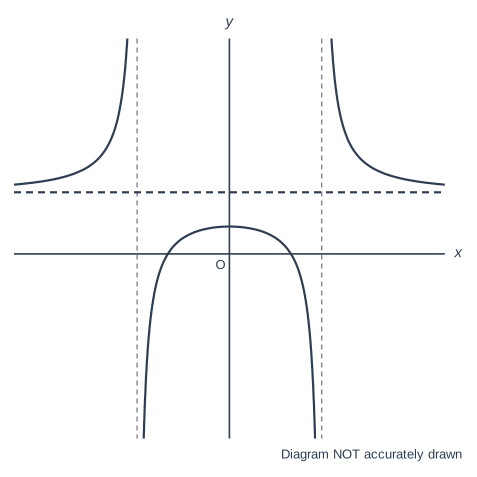
Figure 1 shows a sketch of the curve \(C\) with equation
\[y = \dfrac{2x^2 - 8}{x^2 - 9}, \quad x ≠ \pm 3\]
Write down the equations of the three asymptotes of \(C\).

Find the coordinates of the points where \(C\) meets the coordinate axes.

By writing \(\dfrac{2x^2 - 8}{x^2 - 9}\) in the form \(2 + \dfrac{a}{x^2 - 9}\), or otherwise, find the set of values of the constant \(k\) for which the equation
\[\dfrac{2x^2 - 8}{x^2 - 9} = k\]
has no real solutions. Give your answer as an inequality in \(k\) or in set notation.

A sketch on a pair of axes (x across, y up) with no scale marked, the axes crossing at the origin O. It is marked "Diagram NOT accurately drawn". Curve C is a reciprocal-type curve in 3 separate branches: it meets the x-axis twice; these points cannot be read off, as the sketch has no scale; it crosses the y-axis at a point that cannot be read off, as the sketch has no scale; it has a maximum point, which cannot be read off, as the sketch has no scale; it has vertical asymptotes (drawn as dashed lines) that the curve gets closer and closer to. The dashed line is a horizontal straight line; its position cannot be read off, as the sketch has no scale.

Model answer

Vertical asymptotes where \(x^2 - 9 = 0\): \(x = 3\) and \(x = -3\). As \(x \to \pm\infty\), \(y \to 2\): horizontal asymptote \(y = 2\).
\(x = 0\): \(y = \dfrac{-8}{-9} = \dfrac{8}{9}\), giving \(\left(0, \dfrac{8}{9}\right)\); \(y = 0\): \(2x^2 = 8\), \(x^2 = 4\), giving \((2, 0)\) and \((-2, 0)\).
\(\dfrac{2x^2 - 8}{x^2 - 9} = \dfrac{2(x^2 - 9) + 10}{x^2 - 9} = 2 + \dfrac{10}{x^2 - 9}\)
For \(|x| < 3\): \(-9 \leqslant x^2 - 9 < 0\), so \(\dfrac{10}{x^2 - 9} \leqslant -\dfrac{10}{9}\) and \(y \leqslant \dfrac{8}{9}\) (with \(y = \dfrac{8}{9}\) at \(x = 0\)).
For \(|x| > 3\): \(x^2 - 9 > 0\), so \(y > 2\), taking every value greater than 2.
So \(y\) takes every value \(\leqslant \dfrac{8}{9}\) and every value \(> 2\), and no others.
The equation has no real solutions for \(\left\{k : \dfrac{8}{9} < k \leqslant 2\right\}\).

Explanation

The vertical asymptotes come from the zeros of the denominator and the horizontal one from the behaviour for large \(x\), where the fraction tends to 2. Writing \(y = 2 + \dfrac{10}{x^2 - 9}\) shows that the middle branch never rises above \(\dfrac{8}{9}\) and the outer branches stay above 2, so horizontal lines \(y = k\) with \(\dfrac{8}{9} < k \leqslant 2\) miss the curve. Common errors are excluding \(k = 2\) from the set, although \(y = 2\) is never reached, and missing the horizontal asymptote.

Mark scheme
  1. 1 mark

    B1 \(x = 3\) and \(x = -3\); correct answers with no working score 6 marks (see comments)

    An answer of \(x = \pm 3\), \(y = 2\), \(\left(0, \dfrac{8}{9}\right)\), \((2, 0)\), \((-2, 0)\) and \(\left\{k : \dfrac{8}{9} < k \leqslant 2\right\}\) with no working scores 6 marks: the M1 needs a method for the values of \(k\). Both vertical asymptotes are needed for this mark.

  2. 1 mark

    B1 \(y = 2\)

  3. 1 mark

    B1 \(\left(0, \dfrac{8}{9}\right)\)

    Accept \(x = 0\), \(y = \dfrac{8}{9}\). Do not accept 0.889 unless \(\dfrac{8}{9}\) is seen.

  4. 1 mark

    B1 \((2, 0)\) and \((-2, 0)\)

    Both needed.

  5. 1 mark

    M1 Writes \(y = 2 + \dfrac{10}{x^2 - 9}\) and considers its values for \(|x| < 3\) and \(|x| > 3\); or rearranges \(\dfrac{2x^2 - 8}{x^2 - 9} = k\) to \(x^2 = \dfrac{9k - 8}{k - 2}\) and requires \(\dfrac{9k - 8}{k - 2} \geqslant 0\)

  6. 1 mark

    A1 Finds that \(y \leqslant \dfrac{8}{9}\) for \(|x| < 3\) (greatest value \(\dfrac{8}{9}\) at \(x = 0\)) and \(y > 2\) for \(|x| > 3\); or critical values \(k = \dfrac{8}{9}\) and \(k = 2\)

  7. 1 mark

    A1 \(\left\{k : \dfrac{8}{9} < k \leqslant 2\right\}\)

    Depends on the M mark. Requires \(\dfrac{8}{9}\) excluded (the equation has the solution \(x = 0\)) and 2 included (\(y = 2\) is an asymptote, never reached). Accept \(\dfrac{8}{9} < k \leqslant 2\) or interval notation \(\left(\dfrac{8}{9}, 2\right]\); decimals such as \(0.889 < k \leqslant 2\) score A0.

Question 4

8 marks

A baker models the time, \(t\) minutes, taken for a batch of dough to rise as inversely proportional to \((\theta - 10)\), where \(\theta\) °C is the temperature of the kitchen and \(\theta > 10\). At a temperature of 25 °C, the dough takes 90 minutes to rise.

Find an equation for \(t\) in terms of \(\theta\).

Using the model, find the time taken for the dough to rise at 28 °C, and the temperature at which the dough rises in 1 hour.

State the equation of the vertical asymptote of the graph of \(t\) against \(\theta\), and explain what it means in context.

Give one reason why the model is not suitable for very high temperatures.

Model answer

\(t = \dfrac{k}{\theta - 10}\); \(90 = \dfrac{k}{15}\), so \(k = 1350\)
\(t = \dfrac{1350}{\theta - 10}\)
\(\theta = 28\): \(t = \dfrac{1350}{18} = 75\) minutes
\(t = 60\): \(\theta - 10 = \dfrac{1350}{60} = 22.5\), so \(\theta = 32.5\) °C
Vertical asymptote: \(\theta = 10\). As \(\theta\) decreases towards 10 °C, \(t\) increases without limit, so the model predicts that the dough takes longer and longer to rise and would barely rise at all close to 10 °C.
At very high temperatures the yeast would be killed and the dough would stop rising, but the model predicts an ever shorter rising time, so it is not suitable.

Explanation

'Inversely proportional to \((\theta - 10)\)' means \(t = \dfrac{k}{\theta - 10}\), and the values at 25 °C fix \(k = 1350\); the time must be used in minutes, so 1 hour is \(t = 60\). The graph is a reciprocal curve translated 10 units to the right, so its vertical asymptote \(\theta = 10\) is where the predicted time becomes unlimited. Common errors are using \(t = k(\theta - 10)\), using \(t = 1\) for one hour and giving limitations that are not about high temperatures.

Mark scheme
  1. 1 mark

    M1 Writes \(t = \dfrac{k}{\theta - 10}\) and uses \(\theta = 25\), \(t = 90\) to find \(k\); or correct answers with no working (6 marks, see comments)

    An answer of \(t = \dfrac{1350}{\theta - 10}\), 75 minutes, 32.5 °C and \(\theta = 10\) with no working scores 6 marks; the meaning of the asymptote and the reason are needed for the last two marks.

  2. 1 mark

    A1 \(t = \dfrac{1350}{\theta - 10}\)

    A complete equation is required: \(k = 1350\) alone scores A0.

  3. 1 mark

    A1 75 minutes

    Depends on the M mark. Units not required.

  4. 1 mark

    M1 Solves \(\dfrac{1350}{\theta - 10} = 60\) (their \(k\))

    Using \(t = 1\) (hour) scores M0.

  5. 1 mark

    A1 \(\theta = 32.5\) (°C)

  6. 1 mark

    B1 \(\theta = 10\)

    An equation is needed: 10 alone scores B0.

  7. 1 mark

    B1 A correct interpretation in context: as the temperature falls towards 10 °C the time taken for the dough to rise increases without limit, so the model predicts that the dough would (almost) not rise at temperatures close to 10 °C

    Must refer to the dough rising, or the time taken, in context; 'the graph never reaches 10' alone scores B0.

  8. 1 mark

    B1 A valid reason, e.g. at high temperatures the yeast is killed (or the dough starts to bake), so the dough would stop rising, but the model predicts that it rises faster and faster as \(\theta\) increases

    The reason must be about high temperatures. Do not accept 'the time becomes negative', which does not happen for \(\theta > 10\).

Ready to try the rest? Every answer you write is marked against the mark scheme, so you can see exactly where the marks are.

Study Helper Hints first, answers after you try

Stuck on this one? Ask for a hint and I’ll point you in the right direction, without giving the answer away. Once you’ve checked your answer, I’ll show you how the marks are awarded.