Which group benefited more from the New Deal:
• farmers
• industrial workers?
Explain your answer with reference to both bullet points.
Model answer
Farmers gained a great deal from the New Deal, especially those who owned land. Under the Agricultural Adjustment Act of 1933, the government paid farmers to grow less, and as surpluses shrank, prices and farm incomes rose. The Farm Credit Administration refinanced farm mortgages, so fewer families lost their farms. Although the Supreme Court struck down the AAA in 1936, it was quickly replaced. The Soil Conservation Service and the Shelterbelt Project helped farmers on the Plains recover from the Dust Bowl, and the Rural Electrification Administration began to bring electricity to farms, when in 1935 only about one in ten had it. However, the benefits went mainly to landowners. Many sharecroppers and tenant farmers, a large number of them African American, were evicted so that landowners could take land out of production and keep the AAA payments, and farm labourers were excluded from Social Security.
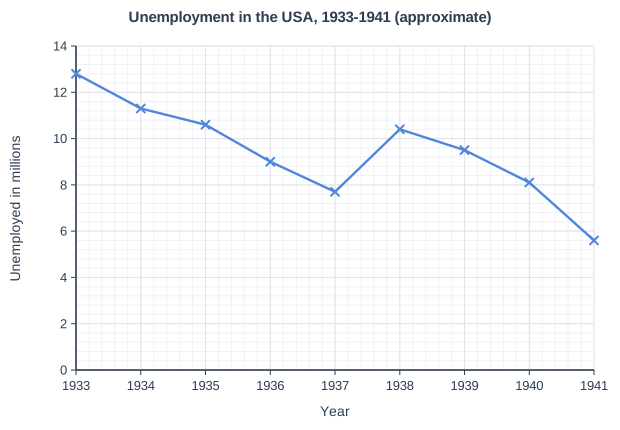
Industrial workers also gained a lot. Section 7(a) of the National Industrial Recovery Act and then the Wagner Act of 1935 protected their right to join unions, and membership rose from about 3 million in 1933 to about 9 million in 1939. Through the CIO, workers in mass-production industries won recognition, most famously in the sit-down strike at General Motors in Flint in 1936-37. The Fair Labor Standards Act of 1938 set a minimum wage of 25 cents an hour and maximum hours, and Social Security gave industrial workers pensions and unemployment insurance. However, unemployment stayed high, with about 9.5 million out of work in 1939, some employers resisted violently, as in the Memorial Day Massacre of 1937, and many unions excluded Black workers.
Overall, industrial workers benefited more. Both groups gained, but farmers' gains went mostly to landowners, while many of the poorest people on the land were actually harmed. Industrial workers' gains, such as union rights, a minimum wage and Social Security, applied to millions of workers and were permanent, changing the balance of power between workers and employers for decades. The New Deal raised farm prices, but it transformed the position of industrial workers.
Explanation
Key knowledge: the AAA, farm credit, soil conservation and electrification helped landowning farmers while sharecroppers were evicted; union rights, minimum wages and Social Security helped industrial workers, though unemployment stayed high. Level 4 needs both explained precisely and a sustained judgement that recognises differences within each group.